15 Luxury Hardscape Concepts Ridgeline Uses to Elevate Southern California Homes
Los Angeles homes wear their landscape like a tailored suit. The lines matter, the fit matters, and the fabric must breathe. After two decades building outdoor environments across the basin, the coast, and the foothills, our team at Ridgeline Outdoor Living has learned that luxury hardscape is not about excess. It is about precision. It is about details that perform as well as they photograph, and materials that withstand salt air, high sun, clay soils, and the occasional winter deluge. It is also about understanding the rhythm of Southern California life, from weeknight suppers outside to lively Sunday afternoons around the pool.
The following concepts reflect what we specify and build most for design-forward properties in Los Angeles County and neighboring communities. You will recognize several themes that regularly appear in homeowner searches, from 15 Paver Patio Designs Los Angeles Homeowners Love to The Ultimate Guide to Drought-Tolerant Landscaping in Los Angeles. The constant thread is restraint, craft, and function. Good hardscape helps a home breathe.
1. Architectural Paver Terraces That Read Like Rooms
A paver terrace should feel inevitable, as if the house grew out onto the land. We use large-format porcelain and true concrete pavers to create outdoor rooms with crisp joints and tight tolerances. In modern settings, rectified 24 by 48 inch porcelain planks read as interior flooring that simply continues outside. In Spanish or transitional homes, we favor 12 by 24 inch concrete pavers with a sandblasted finish, pulled off the wall plane by a 3 inch gravel reveal that keeps stucco dry and adds a clean shadow line.
Pattern matters. A running bond emphasizes long sightlines, while a 45 degree herringbone can reorient a space and make a compact courtyard feel intentional. When clients ask for 15 Paver Patio Designs Los Angeles Homeowners Love, we usually develop three or four options that respond to how the sun moves and where people actually want to sit at 5 pm in July. The “right” design is the one that gets used.
Paver patios vs stamped concrete comes up weekly. In our climate, pavers win most of the time because they tend to be cooler underfoot and easier to repair after a plumbing run or subgrade movement. Stamped concrete can shine on budget-driven projects, but the repaint and reseal cycle can frustrate clients who expected a set‑and‑forget surface.
Business Name: Ridgeline Outdoor Living
Address: 845 E Walnut St, Pasadena, CA 91101, United States
Phone: (626) 469-5822
Ridgeline Outdoor Living
Ridgeline Outdoor Living is a Pasadena-based landscape design-build company serving Greater Los Angeles with custom outdoor living, hardscape, and drought-tolerant landscape solutions. The company specializes in patios, retaining walls, outdoor kitchens, drainage, hillside projects, and turnkey landscape construction, handling projects from design and permitting through final build and warranty.
845 E Walnut St, Pasadena, CA 91101, USA
Business Hours:
- Monday – Saturday: 8:00 AM – 6:00 PM
- Sunday: Closed
Follow Us:
Pros and cons that we review at the schematic phase:
- Pavers: modular repairs, permeable options, cooler surface, higher upfront cost.
- Stamped concrete: lower initial cost, monolithic look, fewer joints, future crack risk.
- Porcelain pavers on pedestals: fast drainage, easy access to utilities, premium look, needs a rigid substrate or stable base.
- Natural stone: unmatched character, variable thickness, higher install skill, sealant and care considerations.
2. Driveways With Presence and Performance
A driveway introduces the property before the front door does. Ribbon drives with a central band of native thyme or dymondia soften the approach and reduce heat gain. In larger forecourts, permeable interlocking concrete pavers over an engineered open-graded base absorb and detain stormwater, a practical response to the water on, water off reality of our winters.
When clients reference 15 Driveway Paving Ideas to Improve Curb Appeal, we start by aligning material cues with the architecture. For a Brentwood farmhouse, we used a pale limestone chip seal in the parking court, framed by charcoal concrete banding that repeats the window trim color. In a Hollywood Hills modern, we set linear concrete slabs with tight synthetic turf joints for a gallery effect that cleans with a quick blower. We like to set low bollard or in-grade LEDs at the apron and along curves for nighttime comfort. The lighting must be felt, not seen, and it must not blind a neighbor.
Expect a properly built custom driveway in Los Angeles to run from 35 to 85 dollars per square foot for pavers, depending on access, base depth, and decorative borders. Permeable systems add roughly 10 to 20 dollars per square foot for the deeper open-graded base and underdrains where required.
3. Outdoor Kitchens Dialed to Real Cooking
Good outdoor kitchens earn their keep. They also demand respect for codes and craft. Gas lines in Los Angeles require permitted trenching, bonding, and pressure testing. Electrical runs need GFCI protection and exterior-rated wire. We orient grills to account for afternoon winds, place sinks with the right drop and venting for the distance to the tie-in, and specify vented doors for propane cabinets.
How Much Does an Outdoor Kitchen Cost in Los Angeles? Simple, grill-centered islands start around 25,000 dollars with concrete counters and stucco finishes. C‑shaped entertainment suites with grill, power burner, pizza oven, fridge, ice, sink, warming drawer, trash and recycling, and 18 to 24 linear feet of counter typically land between 60,000 and 120,000 dollars. Stone or Dekton counters, custom steel or Ipe doors, and structural steel for a heavy roof can push builds into the 150,000 to 200,000 dollar range.
Four cost drivers to consider early:
- Utilities: gas, electric, and drain runs, distance to tie-ins, and slab coring.
- Appliances: built-in quality varies, and pro brands change ventilation and clearance needs.
- Counters and finishes: porcelain or Dekton resist heat and stains, natural stone offers soul and variation.
- Shade and shelter: pergolas, heaters, and wind screens extend the season and protect finishes.
Outdoor Kitchen Trends Los Angeles Homeowners Are Choosing include integrated planchas for vegetables and fish, rotisserie baskets for weekend entertaining, and quiet outdoor-rated fridges that do not hum through a dinner conversation. We now specify more induction wok zones than dedicated pizza ovens, largely because weekday cooking favors speed and cleanup. When a pizza oven is a must, we site it for safe clearances and include a wood storage cubby that breathes.
4. Fire Features That Gather People, Not Smoke
Local codes limit wood burning in many areas, and spare the air days restrict use. Most of our fire features are natural gas or propane. Our installers pull lines through dedicated sleeves set under patios to avoid saw cuts later. We specify burners that match pan size to prevent flame tulips and insist on air mixers when propane is used to reduce soot on glass media.
For 12 Backyard Fire Pit Ideas for Entertaining Year‑Round, the elegance usually lies in restraint. A 48 inch round with a 4 inch stone lip gives elbows a perch and still lets knees tuck. Linear fire tables work on narrow decks, but we avoid placing them where prevailing winds will shear the flame. Clearances from structures, trees, and eaves are non-negotiable. In coastal neighborhoods, we often add wind baffles of low iron glass, seated into hidden channels in the capstone. Nothing should rattle when the Santa Anas arrive.
5. Water Features That Sound Like Calm
Water is a luxury and must be handled responsibly. The best fountains in Southern California use recirculating systems, auto-fill valves, and timers that match actual usage patterns. We lean on low-profile rills, copper scuppers that drop sheets into narrow basins, and basalt bowls fed by hidden nozzles. The goal is not a theme park. It is a sound wall that masks street noise and adds a shimmer to light.
For 12 Water Feature Ideas for Luxury Los Angeles Backyards, we often propose a trio of options at design development: a reflective trough beside a dining terrace, a corner cascade that can live at low volume during a party, and a courtyard bowl that guests notice on arrival. Evaporation is real. A 6 by 12 foot rill at 1 inch depth in July will lose several gallons a day to air. We design water elements as part of 15 Water-Wise Landscaping Ideas for California Homes by clustering them near seating areas where they will be enjoyed and minimizing total surface area for a given effect.
6. Pergolas, Covered Patios, and Shade the Way You Use It
Pergolas vs Covered Patios is not an aesthetic debate, it is a comfort calculation. Slatted pergolas cast beautiful shadows but do not keep morning dew off cushions or rain off an outdoor TV. We build a lot of motorized louvered pergolas that pivot shut against drizzle. When a true roof is needed, we frame steel or engineered wood, sheath it with exterior panels, and finish the ceiling in tongue-and-groove cedar with flush heaters and fans on separate dimmers.
Why Los Angeles Homeowners Are Investing in Custom Pergolas comes down to season extension. When heaters are set at 8 to 9 feet and controlled in zones, an April dinner is as comfortable as September. We set posts over proper footings and through-sleeve conduits for wires so the system can be serviced without demolition. In wildfire-prone areas, we avoid shake or open attic vents and select ember-resistant designs.
7. Poolside Hardscapes That Respect Heat and Water
Pool Landscaping Ideas for Los Angeles Homes are as much science as style. Surface temperature matters. Travertine stays cooler than dark porcelain. Shellstone and limestone can be comfortable but need sealers that breathe. We measure glare on white decks and aim for a light midtone when possible. Coping profiles need a soft nose for comfort and an overhang that hides the tile line. Where waterline tile meets coping, we allow for a flexible joint to avoid chipping during thermal movement.
Drainage is not optional around a pool. Slot drains at the terrace edge pull splash away from the house. We pitch decks at 1 to 1.5 percent so chairs do not wobble, and we hide expansion joints in pattern lines. Pool equipment pads deserve thoughtful walls or hedges that ease noise while preserving service access. Planting around a pool leans toward low-litter species. You do not want to net jacaranda blossoms every Saturday.
8. Retaining Walls and Terraces on Hillside Properties
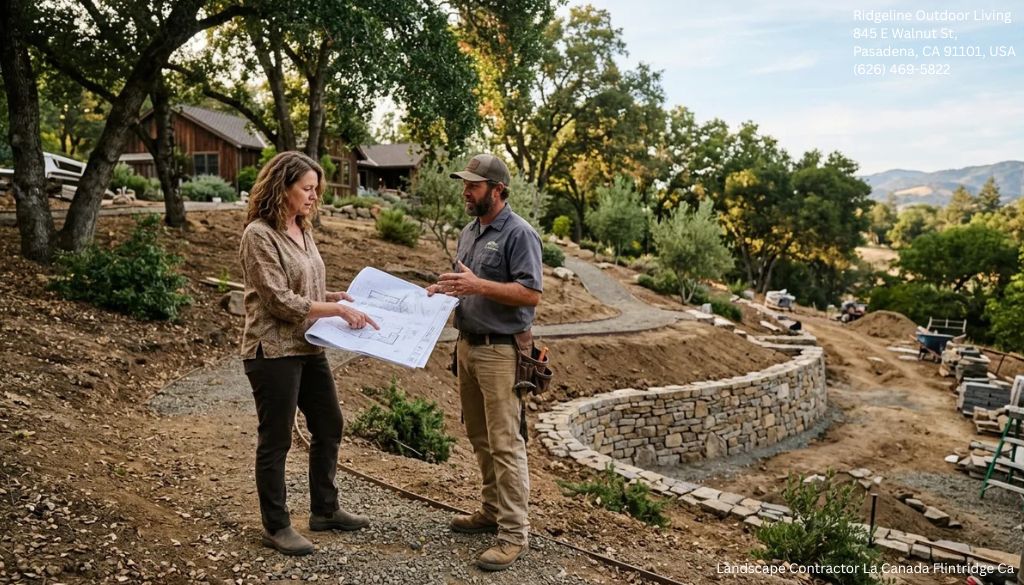
Hillside landscaping in Los Angeles combines engineering and choreography. We regrade in small moves, break tall walls into terraces, and create landings every 30 to 40 feet of linear travel so people stop and look. Retaining Walls for Hillside Properties: What Homeowners Need to Know starts with drainage. Behind every wall, a filter fabric and clean gravel backfill relieve pressure. Perforated drains day‑light to safe locations. In higher walls, geogrid ties the soil mass back into the slope. We coordinate on soils reports and, where required, work with structural engineers for permit sets.
Aesthetics should never lose out to structure. We face concrete block with hand-cut stone where it suits the architecture, or we finish in smooth stucco that color matches the house body for a cohesive frame. How Retaining Walls Prevent Erosion on Hillside Properties is straightforward. They slow water, hold soil, and create stable places for deep-rooted plants that stitch the slope together. The Complete Guide to Hillside Landscaping in Los Angeles is incomplete without lighting. We add low, warm fixtures to risers and cap stones so steps feel safe without turning the hillside into a stage.
9. Lighting That Lifts Mood and Guides Movement
Outdoor lighting in Los Angeles landscapes should be layered and quiet. Path lights at 12 to 14 inches with wide beams keep lenses out of your eyes. Wall washes soften stucco and stone, and a few downlights placed high in trees cast a natural moonlight. We specify 2700K lamps for warmth and avoid 4000K that can look clinical on plaster.
Ten Outdoor Lighting Ideas for Los Angeles Landscapes often start with what to avoid. Ten Outdoor Lighting Mistakes That Reduce Curb Appeal include bullet spots on faces, airport runway path lights, and placing bright fixtures directly opposite windows. We use stainless transformers with dedicated circuits for zones, leave 10 to 20 percent spare capacity for future additions, and map every run for service. Smart controls let clients set scenes for dining, swim, and late walk, then forget it.
10. Drainage That Works When Skies Open
The storms of early 2024 reminded many homeowners that topography wins if you do not respect it. French Drains Explained: Protecting Your Property From Water Damage is less about the pipe than the aggregate and fabric that keep fines out. We dig to firm native soil, lay a woven geotextile, set a bed of 3/4 inch rock, place perforated pipe holes down, then wrap the entire burrito in fabric and backfill in clean rock. We pitch to a safe discharge that will not erode a neighbor’s yard.
In courtyards and along house lines, we like slot drains that disappear into paving joints. How to Solve Common Yard Drainage Problems usually involves a handful of moves: break hardpan near downspouts, daylight flows at the lowest property edge, and install catch basins where water collects. Ten Signs Your Yard Needs landscaping guides Better Drainage include algae on paving, musty garage odors, and standing water after 24 hours. The cost to remedy ranges widely, from a few thousand dollars for a pair of basins and a tie‑in to 20,000 dollars or more for a complete system under a large patio. Good drainage is not attractive on an estimate, yet it is the quiet foundation of a long‑lived landscape.
11. Drought‑Tolerant Frameworks That Still Feel Lush
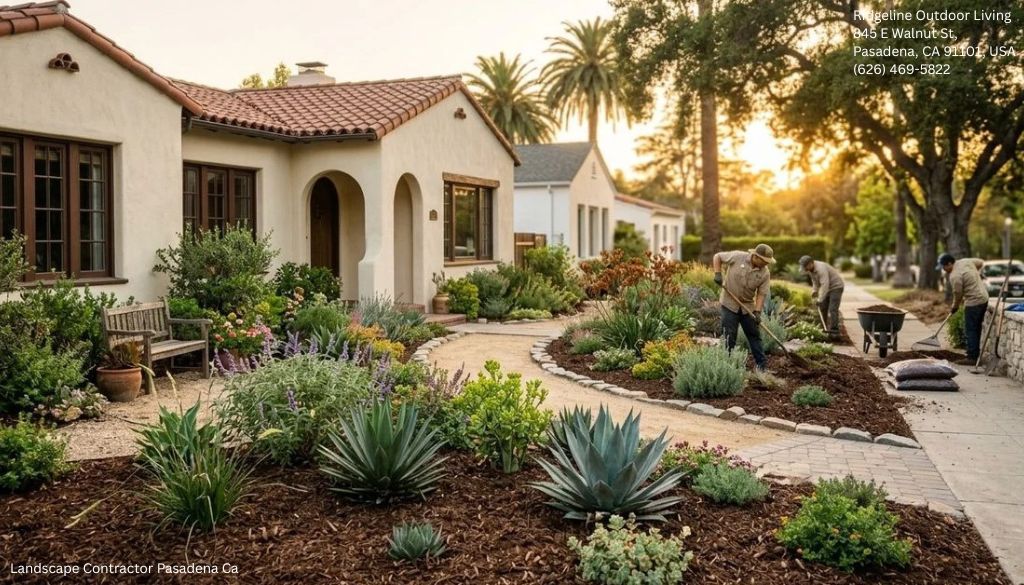
Why Drought‑Tolerant Landscaping Is a Smart Investment is not rhetorical here. Water rates and restrictions are real. The Best Drought‑Tolerant Plants for Los Angeles Yards still give you texture and bloom. We build hardscape bones that set the stage, then plant in hydrozones. Agave attenuata reads architectural near a modern wall. Westringia and myoporum knit on slopes as a green groundcover without the maintenance of a lawn. Gravel or decomposed granite mulches complement stone and keep soil cooler. Drip irrigation with pressure compensation makes each emitter deliver what it promises, even on long laterals.
We design for the first three years as plants establish. After that, the system should coast. The Ultimate Guide to Drought‑Tolerant Landscaping in Los Angeles is incomplete without mentioning shade. Every square foot of canopy you add lowers irrigation demand beneath it. A tree is a water saver after year five, even in a modest courtyard.
12. Synthetic Turf Where It Makes Sense
Artificial Turf vs Sod: What’s Best for Los Angeles Homes depends on use. For dog runs, bocce lanes, side yards too narrow to mow, and rooftops where weight matters, a quality turf system is an asset. We set a free‑draining base, incorporate zeolite infill for odor control in pet zones, and ensure the subgrade has fall to a drain. In full sun, turf can run 20 to 40 degrees warmer than air temperature. We design for that. Shade where kids play, or specify lighter fibers with infrared-reflective additives. For showpiece front yards, many clients still prefer a small rectangle of real sod for the coolness and seasonal change, fed by a high-efficiency sub‑surface drip zone and bounded by steel edging to keep lines sharp.
Artificial Turf Installation: Everything Los Angeles Homeowners Should Know boils down to base prep, seam quality, and drainage. The rest is brand marketing. Expect 18 to 30 dollars per square foot in most urban Los Angeles settings, with access and hauling driving the variance.
13. Outdoor Rooms That Borrow Views and Create Privacy
Los Angeles lots are not always large, but they often have layers. We create outdoor rooms with low walls at seat height, raised planters that screen neighbors, and pivoting steel or wood screens that adjust with the sun and the party. Designing the Perfect Outdoor Dining Space typically starts with a 10 by 14 foot footprint to accommodate a table for eight and comfortable circulation. We orient the head of the table toward the view, then feather in soft planting or a living wall behind to make the space intimate. The best rooms have corners and anchors. A dining terrace that adjoins a small herb planter and a wall fountain becomes a place, not a pass‑through.
14. Material Palettes That Age Gracefully
The Best Hardscape Materials for Southern California Landscapes are not the trendiest, they are the most proven. True porcelain pavers resist stains and heat, but can be slippery if polished. We specify a minimum dynamic coefficient of friction suited for wet areas. Cast‑in‑place concrete reads beautifully in modern work, yet it requires control joints and an understanding that hairline cracks are normal. Natural stone rewards care. Basalt pavers look exquisite on a coastal contemporary, yet they blacken salt‑spray unless regularly rinsed. Ipe or Kebony add warmth on steps and benches, but they gray unless oiled. Powder‑coated steel planters tolerate heat and hold a crisp line, though they need drainage holes and risers so they do not stain paving. We tell clients the maintenance cycle up front so finishes never feel like a surprise.
15. Steps, Landings, and Handrails With Purpose
Transitional grades are where a landscape shows its craft. Risers at 6 to 6.5 inches and treads at 14 to 16 inches make stairs that invite your stride. In a Santa Monica project, we carved steps into a hillside using shotcrete cores faced in limestone, then floated 2 inch thermal bluestone treads with a 1 inch projection over risers for a soft shadow. Integrated step lighting under the nosing washes light onto the tread below without glare. Handrails can be sculpture. We fabricate simple steel rails with a clear coat that allows a hint of blue‑black mill scale, or we wrap rails in ipe that warms quickly Browse around this site in morning sun. Landings double as mini‑terraces when they hold a bench or a potted olive.
Craft, Codes, and the Way Ridgeline Builds
How Ridgeline Outdoor Living Approaches Design‑Build Landscaping is simple to describe and difficult to do well. We start by listening. Then we invest where it counts: grading plans that show how water moves, electrical one‑lines sized to the real load, and layouts that translate on site. Our foremen meet inspectors not as an obstacle but as a second set of eyes. Clients often ask What Does Hardscape Construction Cost in Los Angeles. Broadly, front yard refreshes with new walks, a low wall, lighting, and plantings often land between 75,000 and 200,000 dollars. Comprehensive backyards with patios, kitchen, shade structure, lighting, drainage, and planting frequently range from 200,000 to 600,000 dollars, with hillside or pool work adding complexity.
Why Professional Landscape Design Saves Time and Money is not a slogan. On a Bel Air hillside, early soils testing showed an expansive clay layer. By switching to a permeable paver system over an open‑graded base with geogrid reinforcement, we reduced hydrostatic pressure against a planned wall, eliminated a sump and pump, and avoided a set of change orders that would have ballooned late in construction. The client received a landscape that drained, breathed, and aged with grace.
Two short checklists clients find helpful
Before a shovel hits soil, a little homework avoids delays and regrets. Here are two compact checklists we share in early meetings.
Permitting and utilities checklist:
- Confirm property lines, easements, and HOA guidelines.
- Pull gas and electric meter locations for trench planning.
- Photograph and mark existing irrigation and low‑voltage lines.
- Review encroachment permits if work touches the sidewalk.
- Schedule utility locates 48 to 72 hours before digging.
Paver patio design snapshot:
- Choose finish suited to slip resistance where water is present.
- Align joints with house axes, then break symmetry with planting.
- Plan for a gravel reveal at walls to protect stucco and framing.
- Include a conduit sleeve under every walkway for future pulls.
- Place seating where afternoon shade naturally lands.
The throughline: value that shows up every weekend
Ten Hardscaping Features That Increase Property Value reads like a checklist, yet what truly pays back is space that people use. Twelve Outdoor Living Features That Add the Most Value are the ones that draw your family outside on a Tuesday, not only for a party. When we design How Ridgeline Outdoor Living Creates Functional Outdoor Living Spaces, the brief is clear. Build fewer elements, but build them better. Give the landscape good bones. Manage water with respect. Light it gently. And choose materials that you want to touch.
If you are weighing 10 Questions to Ask Before Hiring a Landscape Contractor, ask to see details: a section through a terrace, a drain layout, a lighting one‑line. The right team will talk through trade‑offs, admit what a finish will require over time, and tailor each move to your property. Luxury is a result, not a look. On a quiet evening, when a path light grazes a stucco wall, a breeze lifts the pergola’s shade, and the grill clicks warm under your hand, you will feel it.