Curb Appeal Elevated: Ridgeline’s 15 Driveway Paving Ideas for Los Angeles Homes
Curb appeal in Los Angeles carries a particular weight. Our streets climb hills and dive into canyons, sea salt drifts across coastal neighborhoods, and long, bright seasons bake surfaces nearly year round. A driveway is not just a place to park. It sets the tone for the entire property, frames architecture, and tells guests what to expect inside. When designed well, it also manages stormwater, reduces heat, and stands up to daily use without constant fuss. After two decades designing and building hardscapes throughout the county, I have seen how the right driveway elevates a home more than a fresh coat of paint ever could.
Before the ideas, it helps to recognize the context that shapes every good driveway decision in Los Angeles. Most sites need careful grading to steer water away from garages and entries, especially during sudden winter storms. Some hillside parcels require small retaining walls and compacted base sections to avoid settling. Local material supply can swing costs by 15 to 25 percent, depending on distance and availability. And because drought is our normal, not an exception, permeable construction and drought-tolerant landscaping add real value. With those realities in mind, these fifteen paving ideas show the range of solutions that work here, paired with insights from the field.
Start with function, slope, and water
On a typical LA project, we begin by mapping slope percentages, driveway length, turning radii, and water pathways. A long, straight run on a flat lot is rare. More often, we solve for a gentle S-curve, a steep apron, or a narrow side yard approach that puts tires on the same track every day. Base construction matters more than any finish. Four to six inches of compacted Class II base is a baseline for pavers and stone, with thicker sections on slopes or in clay soils. For concrete, we adjust rebar spacing and mix design for durability and finish. Drainage is nonnegotiable. We incorporate catch basins, permeable joints, or French drains, then route water to dry wells or parkways as codes allow. The difference between a driveway that lasts and one that cracks in the second summer is usually hidden beneath the surface.
Idea 1: Permeable pavers that drink the rain
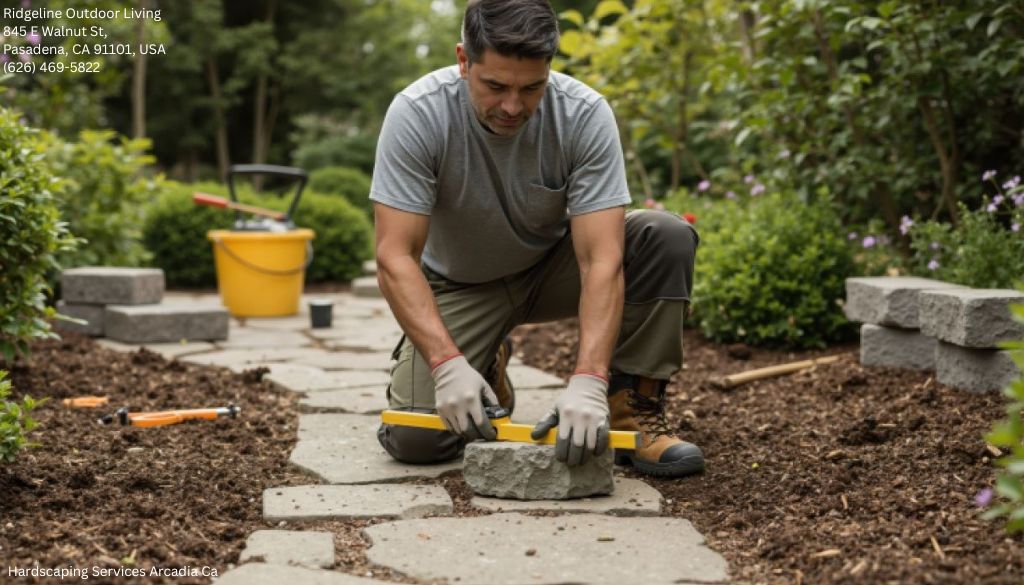
Permeable interlocking concrete pavers handle storms gracefully and reduce runoff, which aligns with the city’s stormwater goals. Joints filled with angular stone let water pass through to an open-graded base. On a small Studio City lot, we installed a 1,200 square foot permeable driveway that absorbed an entire atmospheric river event without a single puddle at the garage threshold. The surface looked like a refined cobble, the base acted like a shallow reservoir, and maintenance was minimal, just seasonal vacuuming of fines. For homeowners weighing sustainability against style, modern permeable pavers come in clean rectangles and subtle color blends that pair well with stucco and contemporary lines.
Business Name: Ridgeline Outdoor Living
Address: 845 E Walnut St, Pasadena, CA 91101, United States
Phone: (626) 469-5822
Ridgeline Outdoor Living
Ridgeline Outdoor Living is a Pasadena-based landscape design-build company serving Greater Los Angeles with custom outdoor living, hardscape, and drought-tolerant landscape solutions. The company specializes in patios, retaining walls, outdoor kitchens, drainage, hillside projects, and turnkey landscape construction, handling projects from design and permitting through final build and warranty.
845 E Walnut St, Pasadena, CA 91101, USA
Business Hours:
- Monday – Saturday: 8:00 AM – 6:00 PM
- Sunday: Closed
Follow Us:
Idea 2: Textured concrete with seeded aggregate
Exposed aggregate concrete suits mid-century and Spanish Revival homes, and it is still one of the most popular driveway materials in Los Angeles because it looks upscale without chasing trends. We pour, seed with pebbles or crushed stone, then wash to reveal texture. The look hides tire marks and dust better than smooth broom finishes. Add integral color in a warm sand or soft charcoal, and the driveway ties into the facade. Control joints are critical. On a 60 foot run, we plan joints every 8 to 10 feet, align them with facade elements when possible, and include a deepened edge at the street apron. Compared with stamped concrete, the finish weathers more honestly and allows localized repairs without obvious patchwork, a point that often tips the balance in the Paver Patios vs Stamped Concrete: Pros and Cons conversation.
Idea 3: Modular porcelain pavers on a reinforced base
Homeowners drawn to refined lines and low maintenance often ask for porcelain. Outdoor-rated porcelain pavers resist staining, hold color, and deliver a crisp modern grid. On driveways, they require correct engineering. We have success setting them on a concrete slab or an extra-stable open-graded base with edge confinement. Tires do not scuff them the way they will softer stones. The finish pairs cleanly with minimalist landscapes and matches adjacent walkways or 15 Paver Patio Designs Los Angeles Homeowners Love. This continuity makes small lots feel larger.
Idea 4: Natural stone bands as traffic guides
If you love the warmth of stone but need a budget-friendly approach, consider accent bands. We often run two parallel bands of limestone or basalt within a field of concrete or decomposed granite. The stone becomes a tactile guide for tires, reduces wear on the softer material, and gives a tailored look without the cost of full stone coverage. A Hancock Park client paired flamed basalt bands with sandy integral color concrete and a clipped hedge. The result looked bespoke, yet construction remained straightforward.
Idea 5: Ribbon drive with drought-tolerant planting
Historic LA neighborhoods used ribbon drives long before water conservation became a design driver. Two structural strips carry vehicle loads while a center strip stays soft. Traditionally, that was turf. Now we specify low, drought-tolerant groundcovers like Dymondia or Carissa minima, or a narrow run of permeable gravel. The look feels airy and preserves more permeable area, which helps when you are also pursuing The Ultimate Guide to Drought-Tolerant Landscaping in Los Angeles. On corner lots, a ribbon drive draws the eye to the landscape rather than the parking.
Idea 6: Charcoal concrete with saw-cut scoring
For contemporary architecture, almost nothing beats a dark, monolithic plane broken by precise saw cuts. We pour with integrally colored concrete in a charcoal range, then lay out a grid that lines up with windows and cladding seams. Each panel is 4 to 6 feet, which helps manage shrinkage. The color reads like steel at dusk and frames architectural lighting. Keep in mind that darker surfaces store more heat. If your driveway doubles as a play area, consider a lighter shade or a solar reflective coating to keep temperatures manageable in July.
Idea 7: Reclaimed brick in herringbone
Reclaimed brick brings a patina you cannot fake. We clean, sort, and lay in herringbone with a substantial soldier course at edges. On a Craftsman bungalow in Echo Park, a reclaimed brick driveway pulled the entire frontage together, tying the porch, path, and low wall into one story. Expect a bit more maintenance. Brick breathes and shifts, so occasional joint sand replenishment and a light seal help. The payoff is character that concrete cannot match.
Idea 8: Decomposed granite stabilized with resin
Stabilized decomposed granite offers a natural look and a comfortable price, but it must be done correctly for vehicles. We specify a resin stabilizer and compact in lifts over a reinforced base. This works best for shorter, flatter driveways or as part of a ribbon or track design. The color options, from warm golds to cooler grays, play nicely with native and Mediterranean plantings. When paired with steel or stone edging, the surface stays crisp instead of bleeding into beds.
Idea 9: Large-format concrete pavers with gravel joints
Oversized pavers, often 24 by 36 inches or larger, create a sophisticated rhythm. We set them on a reinforced base and keep joints just wide enough to fill with angular gravel or a creeping groundcover. The joints lighten the surface, break up mass, and allow better drainage than monolithic slabs. At a Bel Air project, this approach let us float the driveway visually, tying it to a series of garden rooms that featured 10 Outdoor Living Ideas Transforming Los Angeles Backyards. The repetition from curb to courtyard calmed a complex site.
Idea 10: Basalt or limestone cobble aprons and borders
A short apron at the street made of dense stone cobbles solves two common issues. It handles the punishing forces at the curb cut where heavy vehicles roll daily, and it sets a threshold that feels special. We have used split-face basalt, limestone setts, and even reclaimed granite from old curbs. Costs stay reasonable because the area is small, and the repairability is high. If a trash truck chews a corner, we pop out the pieces and reset them in a morning.
Idea 11: Perimeter channel drains and French drains that vanish
Curb appeal evaporates when water ponds at the garage. Proper drainage, executed cleanly, protects both structure and aesthetics. On tight city lots, we tuck linear channel drains along the garage threshold and tie them to French drains that run beneath the driveway field. The trench gets wrapped in filter fabric, filled with angular rock, and covered with pavers or gravel. Done right, it disappears. Homeowners skeptical about visible grates often become fans once they see how effectively French Drains Explained: Protecting Your Property From Water Damage applies to driveways.
Idea 12: Integrated driveway lighting
Driveways deserve thoughtful lighting, not just a coach light over the garage. We recess low-glare LEDs into concrete bands, set bollards in planting along edges, and add under-cap strip lights to flanking seat walls. Wiring must be planned early so conduits sit below the base layers. Warm color temperatures near 2700K keep the scene residential, while precise beam spreads avoid glare for drivers. As with 10 Outdoor Lighting Ideas for Los Angeles Landscapes, less is more. Aim for wayfinding and security, not a runway.
Idea 13: Terraced driveways on hillside properties
Hillside parcels often call for a terraced approach, which solves grade, parking, and erosion in one move. We step the driveway into two or three flat pads held by low retaining walls, then connect them with short ramps. Engineering matters. Walls need drainage, geogrid, and footing depth matched to slope and soil. Retaining Walls for Hillside Properties: What Homeowners Need to Know applies here fully. The terraced pattern also creates planting pockets for natives that stabilize the slope, and it limits long sightlines of hardscape, which helps the home blend with the hillside.
Idea 14: Concrete with exposed stone insets
When a client wants a custom look without committing to a full stone drive, we inlay stone panels into a concrete field. The contrast of smooth concrete and rough stone reads as tailored, and it allows stone only where it has the most visual impact, usually near the entry path or at the apron. This method also improves traction on steeper sections without resorting to a heavy broom texture.
Idea 15: Mixed materials with artificial turf accents
Artificial turf has come a long way. When used sparingly as accents between pavers or in a ribbon drive, it delivers green without water or mowing. We keep the turf on the edges or center strip, never where tires shear. Pair it with pavers or dark concrete so the green reads intentional, not plastic. For homeowners puzzling over Artificial Turf vs Sod: What’s Best for Los Angeles Homes, the driveway is often where turf earns its keep as an accent, not a field.
The material palette that performs in Los Angeles
Across these ideas, several materials prove themselves repeatedly in our climate. Concrete remains the workhorse, cost effective, easy to customize with color and finish, and strong enough for frequent use. Interlocking pavers, especially permeable systems, give repair flexibility and reduce cracking, which makes them some of The Most Popular Driveway Materials in Los Angeles. Natural stone raises the aesthetic ceiling and keeps looking better with age, provided it is dense enough for vehicular loads. Porcelain adds a sleek, modern option for those who want low absorption and a clean look. Stabilized decomposed granite offers an organic feel when engineered correctly.
Many clients ask how driveway choices relate to other investments around the home. The answer is that consistent materials and details create cohesion. Echoing a driveway’s porcelain grid on the back patio can unify front and back, much like themes shown in 15 Luxury Hardscape Ideas for Southern California Homes. Tying in low water plants and permeable joints supports Why Drought-Tolerant Landscaping Is a Smart Investment, both environmentally and economically.
Pre-design checks that save time and money
- Verify slope and turning radii with a quick on-site mockup using stakes and a tape.
- Locate utilities and plan conduit runs early to avoid trenching through finished surfaces.
- Test drainage paths during a hose test, then size channel or French drains accordingly.
- Confirm HOA or historic district requirements for materials and colors.
- Align driveway geometry with front door, garage openings, and street sightlines for a natural arrival.
Cost ranges and what drives them
Every site is different, and costs in Los Angeles reflect access, base requirements, and material sourcing. Broadly, we see the following installed ranges for driveways of typical thickness and preparation, excluding major grading or retaining walls.
- Broom or light exposed aggregate concrete: 12 to 20 dollars per square foot.
- Integrally colored, saw-cut, or seeded aggregate concrete: 16 to 28 dollars per square foot.
- Interlocking concrete pavers, standard to permeable: 22 to 40 dollars per square foot.
- Natural stone or large-format porcelain on reinforced base: 35 to 65 dollars per square foot.
- Stabilized decomposed granite with edging, vehicle rated: 14 to 24 dollars per square foot.
On steep slopes, in heavy clay soils, or where access is constrained by narrow side yards, add 10 to 30 percent for extra base depth, compaction, and labor. Small retaining walls, often required on hillside drives, usually add several thousand dollars each depending on height and engineering. For homeowners budgeting across a property, these figures fit inside broader discussions like What Does Hardscape Construction Cost in Los Angeles.
Drainage, heat, and maintenance, the three long-term realities
When a driveway fails early, the culprit is almost always one of these three. Drainage comes first. Even with permeable pavements, you must route overflow safely. We design with at least a 1 percent cross slope and integrate drains where grade forces water toward structures. On streets that back water up during storms, we include a subtle threshold ridge to keep water out of garages.
Heat is a close second. Lighter hardscape design Pasadena surfaces reflect more sunlight and stay cooler. For south or west facing drives, consider integrally colored concrete in a light tone or pavers with a high solar reflectance index. If a dark look is nonnegotiable, plan trees or a pergola near parking, a topic that ties into Pergolas vs Covered Patios: Which Is Right for Your Home when the driveway meets a courtyard.
Maintenance should be honest and manageable. Permeable pavers need periodic vacuuming to keep joints open. Concrete benefits from cleaning and resealing every few years if you want to preserve color. Brick and stone need joint sand top-ups and, in shaded canyons, an occasional gentle cleaning for algae. Good edge restraint and base preparation reduce movement and maintenance over the long haul.
Tying the driveway to the larger landscape
A driveway that stops abruptly at the garage misses an opportunity. We frequently continue materials from the drive into walkways, courtyards, and side yards so the property reads as one space. When projects stretch to the backyard, the front driveway can set cues for Outdoor Kitchen Trends Los Angeles Homeowners Are Choosing or 12 Backyard Fire Pit Ideas for Entertaining Year-Round. A consistent concrete color or recurring stone band carries the eye smoothly from front to back.
Planting completes the picture. Driveways surrounded by The Best Drought-Tolerant Plants for Los Angeles Yards wear well. Think evergreen structure like olive, Westringia, and manzanita near aprons, then seasonal interest in narrow beds with salvias and grasses that do not flop into the path of tires. Keep mulch thinner near edges to avoid tracking. Irrigation should pull back from hardscape edges to prevent calcium deposits and slick algae, and drip lines need pressure regulation to stay even across slopes.
Lighting and security play supporting roles. From 10 Outdoor Lighting Mistakes That Reduce Curb Appeal, the key insight is that lights must guide, not blind. Low fixtures wash surfaces for orientation, and a few well-aimed accents pick up specimen planting or a house number plaque. Cameras and motion detectors should mount out of the driver’s direct sightline to avoid glare and lens flare.
Special cases, steep drives and shared easements
Steep hillside drives require more traction and careful water control. We opt for broomed or exposed aggregate finishes, stone insets for bite, and frequent cross drains. If the drive shares an easement with neighbors, plan details that keep maintenance simple and disputes unlikely. Clear edge restraints, centerline drains that can be snaked, and materials with ready replacement channels help. On a shared drive in the Hollywood Hills, we chose interlocking concrete pavers for that reason alone. When a plumbing repair forced a trench, we lifted and relaid the pavers cleanly, a solution that cemented neighborly goodwill.
How Ridgeline Outdoor Living approaches design and build
Driveways are rarely stand-alone decisions. We start with a site assessment, a conversation about vehicles and routines, and a shared gallery of built work so expectations match reality. We model slope digitally, then mock up key edges with paint or stakes to test turning radii with the homeowner’s cars. Material samples go on the ground in sunlight, not just on a table. If the project includes other elements, like 12 Water Feature Ideas for Luxury Los Angeles Backyards or Pool Landscaping Ideas for Los Angeles Homes, we design all hardscape together. This avoids mismatches later, and it ensures conduits for gates, lighting, or future 12 Backyard Entertainment Features Every Homeowner Should Consider are in place before we pour or compact anything.
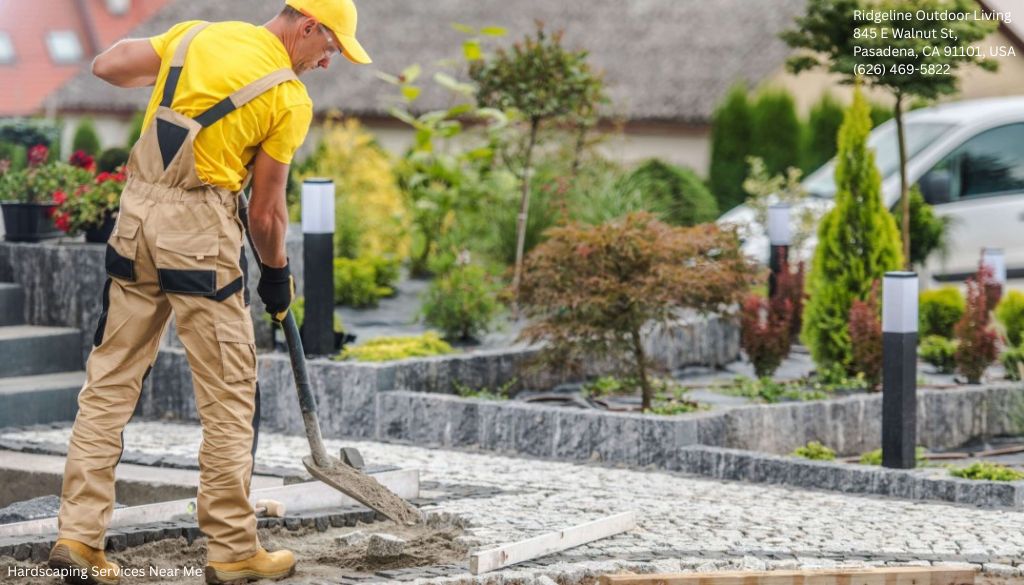
Construction sequencing matters. We rough in drainage first, build any footings or walls, then set base and edges before surfacing. Quality control checks catch compaction and slope. If you are interviewing firms, 10 Questions to Ask Before Hiring a Landscape Contractor applies neatly to driveways. Ask about base thickness, compaction methods, control joint plans, and long-term repair approaches.
When a driveway lifts property value
Not every upgrade pays back equally. From experience and data that appraisers share, driveways that combine curb appeal with functional improvements see the best return. An attractive, permeable paver driveway that resolves flooding at the garage can help appraisals and reduce insurance headaches. Dark, dated concrete with visible cracks drags value down. If you are prioritizing, 10 Hardscaping Features That Increase Property Value often includes driveways at the top, especially on homes where they dominate the front elevation. Small touches help. Stone aprons, aligned scoring, a handsome house number, and even a discreet mailbox pad reinforce the sense of care buyers notice within seconds of arriving.
A brief note on permitting and neighbors
Most driveway resurfacing in Los Angeles does not require a full building permit, but curb cuts, approach changes, and work in the public right of way do. When we alter drainage patterns that tie into city systems, we coordinate with local guidelines. On historic streets or within HOAs, approvals can affect material choices, particularly for bold colors or mixed materials. It pays to ask early, then design within those lines. Noise, dust, and staging for concrete pumps or paver pallets also touch neighbors. A clear schedule and clean site keep goodwill intact through construction.
Choosing among good options
The best driveway for your home should satisfy three tests. It must function for daily life, from load capacity to water control. It should amplify the home’s architecture, not compete with it. And it should respect Los Angeles conditions, from heat to hillsides. If you are stuck between solid contenders, set samples outside and live with them for a week. Hose water across them, park a car for a day, and see which one you enjoy seeing when you come home at night. Often the right choice becomes obvious once material meets light and context.
For homeowners thinking two or three projects ahead, a coherent hardscape plan pays off. Budget for a driveway you love, then tie it into front paths and a landscaping guides back patio in phases. Aligning details with How Ridgeline Outdoor Living Designs Stunning Outdoor Spaces keeps each step moving toward a complete property, not a patchwork. Whether you want a permeable paver field that vanishes water, a dark scored concrete canvas that highlights architecture, or a ribbon drive laced with drought friendly planting, Los Angeles gives you the light and space to make it shine. And when the first turn onto that new surface feels effortless, you will know the work started in the right place, long before the first truck arrived.