How Retaining Walls Prevent Erosion on Hillsides: Ridgeline’s Best Practices
Hillside living delivers views, light, and breezes that a flat lot cannot. It also brings physics to your doorstep. Gravity pulls soil downhill, water accelerates the process, and in Southern California the cycle of dry months followed by episodic storms can turn a gentle slope into a moving mass. A well designed retaining wall does more than hold back dirt. It manages water, breaks the slope into stable benches, and creates usable space where none existed. Done poorly, it becomes a heavy object trying to resist a dynamic force with luck alone.
At Ridgeline Outdoor Living, we work on Los Angeles hillsides week in and week out. We see what lasts through atmospheric river events and what fails after one winter. The difference is rarely about a fancier block or a more expensive veneer. It comes from disciplined engineering, honest site evaluation, and attention to drainage details you cannot see once the wall is finished.
Why erosion accelerates on Los Angeles hillsides
Erosion is a simple concept with complicated causes. On a slope, gravity acts on every grain of soil, and water reduces friction between grains. In Los Angeles, expansive clays, decomposed granite, and fill placed during past construction often coexist on a single lot. After a dry summer, soil can harden and crack, then swell when the first rains arrive. Water follows the path of least resistance along bedding planes, root voids, or old utility trenches. Long, uninterrupted slopes allow runoff to gather velocity. Fire, whether on your property or upslope, removes stabilizing root structures and increases sediment flow the next season.
When you add common residential loads - a driveway above, a pool, an outdoor kitchen, or a row of mature eucalyptus - the forces on a slope increase. Earthquakes add lateral acceleration that spikes pressure on any wall holding back soil. All of this is manageable if you respect it during design.
What a retaining wall actually does
Think of a hillside as a system. A retaining wall is not a barricade. It is a structural and hydrologic component that:
- Reduces the driving force by shortening the effective slope length and flattening the grade on each bench.
- Transfers lateral earth pressure into a stable base through weight, footing, reinforcement, or soil reinforcement.
- Controls subsurface and surface water by collecting, redirecting, and relieving pressure with drains and granular backfill.
- Provides planting terraces that reestablish root mass, which in turn knits the slope and absorbs rainfall.
Every decision - height, batter, base width, backfill, outlet location - affects how well these functions work together.
Reading the hillside before sketching a line
On a first visit, we walk the site with a builder’s eye and a hydrologist’s caution. We make small test pits with a shovel or an auger to see soil type and moisture. We look for salt stains on existing walls, soil bulges, hairline cracks in pavement, or leaning fences that indicate movement. We trace where water currently goes in a storm. Often it ends at a clogged sump, a broken downspout, or a low spot near a foundation.
In Los Angeles, many hillside properties are governed by the Baseline Hillside Ordinance and reviewed by the Department of Building and Safety. If a wall is over 4 feet measured from the bottom of footing to top of wall, or if it supports a surcharge like a driveway or structure, engineering and permits are required. On steep or complex sites, a geotechnical report is not optional. It tells us the allowable bearing capacity, whether there are weak layers, and what water we will encounter at depth. Those numbers shape the wall type and details long before we select a stone face.
Choosing the right wall type for the job
There is no universal best retaining wall. The right choice landscaping guides depends on height, soil, water, access for equipment, aesthetics, and budget. Here are five families we use most often in Los Angeles, each with a sweet spot where it shines:
- Segmental retaining walls with geogrid reinforcement. Dry stacked concrete units on a compacted base, tied back into the hillside with geogrid layers. Excellent for 3 to 12 feet when space behind the wall allows reinforcement length at roughly 0.6 to 0.8 times the wall height. Flexible enough to accommodate small movements during earthquakes without cracking. A range of textures and colors helps them blend into outdoor living areas, patios, or driveways.
- Reinforced concrete or CMU cantilever walls. A steel reinforced footing and stem create a lever arm that resists overturning. Best where the footprint must be small, near property lines or tight driveways. They handle high loads and surcharges, and accept stucco, stone, or board formed finishes. Control joints and waterproofing matter to keep them crisp over time.
- Mechanically stabilized earth with modular facing. Similar to segmental walls but designed for taller heights and larger geogrid zones. Useful when building broad terraces for outdoor kitchens, seating areas, or play lawns. The widened reinforced soil mass becomes the structure rather than the facing alone.
- Gabion baskets and rockery. Wire baskets filled with rock or carefully stacked boulders can work for low to medium heights in naturalistic settings or along swales. They drain well and absorb energy, but require sound foundation treatment and space. A good fit near water features or where a sculpted, rugged look is part of the design language.
- Soldier piles with lagging. Steel H beams drilled into bedrock or dense soil with wood or concrete lagging between. A solution when access is constrained, cuts are steep, or geogrid is not feasible behind the wall. Often used during construction staging, then faced with architectural treatments.
We often blend systems within a property. A short, dry stack garden wall ties into a reinforced segmental wall, which transitions to a hidden concrete stem behind a modern privacy fence. The sequence follows what the site gives us, rather than forcing a single product everywhere.
Drainage is non negotiable
When walls fail, water is usually the accomplice. Hydrostatic pressure adds quickly, even behind a low wall. We treat drainage as a separate design track from structure.
Behind most walls we specify a 12 to 24 inch zone of free draining, angular aggregate, wrapped on the soil side with a non woven filter fabric to keep fines from migrating. A perforated pipe sits at the base of this zone, pitched to a daylight outlet or a basin. If a wall cannot daylight to the front, we tie into a properly sized yard drain system or a sump pump built for outdoor duty.
Weep holes help on solid faced walls, but they are not a substitute for a perforated pipe below. They must connect to the drainage blanket, not to a damp void in the middle of clay. We place cleanouts at logical points so homeowners can flush the system every year before the rains. Discharge should not erode a neighbor’s property or flow across a sidewalk. If the slope collects upslope water, a cutoff drain intercepts it before it reaches the wall.
French drains are often involved on hillside projects. The phrase gets used loosely, but a true French drain is a gravel trench with a perforated pipe that collects subsurface water and lowers the water table near a structure. It pairs well with retaining walls when aligned upslope to intercept flow, or behind the wall to relieve pressure. If you are curious about how they work in practice, the same principles in French Drains Explained: Protecting Your Property From Water Damage apply here, scaled to a wall environment.
Terracing and planting stabilize the whole system
Breaking a tall slope into shorter terraces helps in three ways. First, each wall sees less load. Second, you create flat spaces where water can slow, spread, and infiltrate rather than rush. Third, you earn usable square footage for daily life - a small patio for morning coffee, a vegetable bed, or a path that allows safe maintenance.
Planting is not an afterthought. Roots knit the upper soil, moderate temperature swings, and capture a surprising amount of rainfall. We favor drought tolerant, deep rooted species from The Best Drought-Tolerant Plants for Los Angeles Yards playbook. Toyon, manzanita, rosemary, and lomandra hold banks and look composed with modern hardscape. Drip irrigation delivers water to the roots without saturating the wall backfill, and mulch across terraces reduces splash erosion. For fresh installs going into the wet season, biodegradable erosion blankets on the slope between terraces keep soil in place until plants take hold.
This is where retaining walls earn their keep in outdoor living. A terrace becomes the perfect spot for a compact grill station or a fire feature chosen from 12 Backyard Fire Pit Ideas for Entertaining Year-Round. Low voltage path lights from a thoughtful scheme like 10 Outdoor Lighting Ideas for Los Angeles Landscapes keep steps safe without washing the hillside in glare. If you want a larger destination like a dining area or a pergola, a design study from Pergolas vs Covered Patios: Which Is Right for Your Home? Can be integrated early so the wall is engineered for the added load.
Seismic and surcharge considerations you cannot ignore
Los Angeles walls must behave in earthquakes. Segmental walls with flexible joints often ride out shaking better than a single monolithic element, provided their geogrid and base are correct. For concrete or CMU walls, we specify steel reinforcement and footing dimensions that meet both static and seismic load cases. On narrow lots where a driveway, pool, or building sits near the top of a wall, the added surcharge can double the design pressure. That is not a place for rule of thumb. Your engineer will calculate lateral loads, and your builder should sequence compaction and temporary shoring to keep the cut stable during construction.
Height also matters. Even where code allows an unpermitted 3.5 or 4 foot wall, repeating that height in a stacked fashion without separation is not the same as a single wall of the combined height. The soil between needs to be wide enough to act as a real terrace, with proper drainage and access. We often recommend fewer, taller walls with full engineering and inspection rather than a patchwork of unpermitted tiers that shift over time.
Foundations, bases, and the quiet work of compaction
The neat face of a wall hides the work below grade. Our crews over excavate for a base course, then place a compacted aggregate footing of appropriate depth and width based on wall type and soil. For segmental walls, a typical base is 6 to 12 inches thick on undisturbed native or engineered fill. A simple rule of thumb is to embed the first course at least 10 percent of the wall height, with a minimum depth to get below surface creep. On sloped grades, we step the base to stay on solid ground and prevent a plane of weakness along the toe.
Backfill proceeds in thin lifts, 6 to 8 inches, compacted to target density. This takes time, especially if access limits equipment size. We would rather deliver a job two days later than inherit a wall that creeps because the middle third of the backfill was fluffed in. Where sliding is a risk, we design a shear key at the footing to cut into competent soil. For concrete walls, our typical mix is 3,000 to 4,000 psi with inspection of rebar placement before pour. After curing, we apply waterproofing on the back of concrete walls, then protect it with a drainage board before placing the drainage blanket.
Aesthetic integration with the rest of the property
The most durable wall will still disappoint if it looks like a highway project in a small backyard. Los Angeles architecture runs from Spanish revival to warm modern, and walls should echo those cues. Split face block with a cap sits comfortably near traditional homes and pairs well with paver patios from the palette of 15 Paver Patio Designs Los Angeles Homeowners Love. Board formed concrete works for modern homes, and it can pick up lighting nicely along a stair run. Stone veneer turns a structural CMU wall into a garden element. Gabions tie into water features from 12 Water Feature Ideas for Luxury Los Angeles Backyards without looking forced.
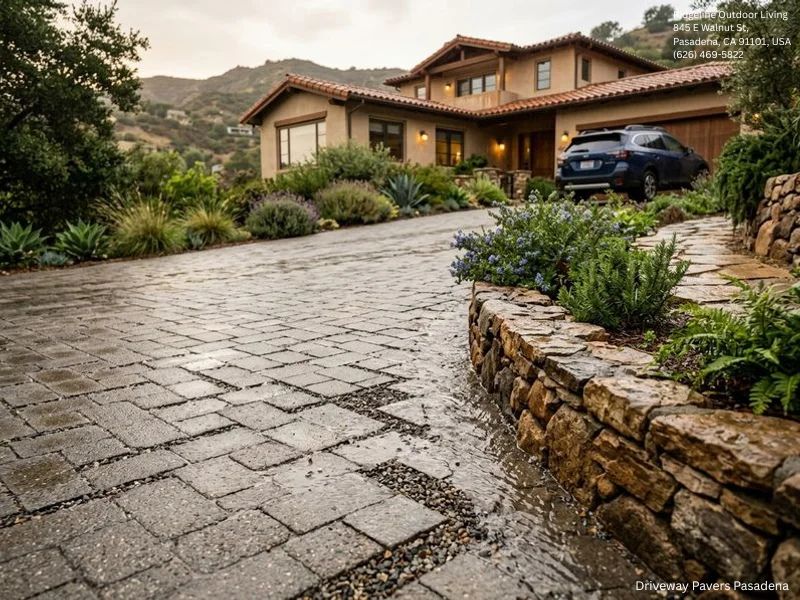
If you plan to repave the driveway, consider the full composition. A low retaining wall at the edge of a drive can double as a seat wall and a planter, and the textures should work with your hardscape choices whether you are weighing Paver Patios vs Stamped Concrete: Pros and Cons or scanning 15 Driveway Paving Ideas to Improve Curb Appeal for inspiration.
Common failure patterns we see - and how we avoid them
A bulge in the middle third of a wall often points to poor compaction at that depth or geogrid not extended far enough back into the hillside. Leaning tops can indicate inadequate embedment or surcharge from a fence or deck that was added later without engineering. Efflorescence on the face and wet stains near joints usually mean clogged weep holes or a missing drainage blanket. Heaving at the base can result from expansive clay cycling between wet and dry seasons, especially where irrigation leaks were allowed to persist behind the wall.
We break this chain early. During design we account for future loads like a planned pergola, outdoor kitchen, or even a small spa, so the wall is built for what will come. During construction we protect open excavations from rain, cover stockpiles, and keep fines out of the drainage aggregate. After completion we walk the owner through the drain outlets and cleanouts so they know what to check before storms.
Permitting, inspections, and the path to a legal, safe wall
In Los Angeles, retaining walls over 4 feet measured from the bottom of footing to the top, or any wall subject to surcharge, require engineered plans and a building permit. Hillside properties often need a soils or geologic report, and some neighborhoods have additional overlay zones that affect grading. Expect plan check comments that refine footing sizes, rebar, and drainage. Field inspections verify footing excavation, reinforcement, and often compaction tests of the backfill. It takes patience, but each step reduces the risk of future failure and liability.
We coordinate with utility locators before we dig. Hillsides hide old gas lines, abandoned sewer laterals, and low voltage landscape wire. A broken line in a cut slope can turn an easy day into emergency shoring. During construction, stormwater BMPs are not window dressing. Silt fences, wattles, and covered stockpiles keep sediment on site and out of the street.
Real costs and what drives them
Homeowners ask what a retaining wall costs as a single number. The honest answer is a range, heavily influenced by access, height, soil, and water. For a typical reinforced segmental retaining wall between 4 and 8 feet tall, installed with proper drainage and compaction, recent Los Angeles projects have landed between 45 and 90 dollars per square foot of face area. Reinforced concrete or CMU walls often range from 100 to 200 dollars per square foot once you add footings, steel, waterproofing, and veneer. Engineering for a hillside wall commonly runs from 2,000 to 6,000 dollars depending on complexity and required reports.
Access is the quiet multiplier. If materials must be hand carried up stairs, production slows and costs rise. If spoils can exit through a side yard with a compact loader, budget pressure eases. Site built features that share structure with a wall - like a built in bench, stairs, or a planter - can be inexpensive adds if planned early. If they are changes after inspection, they add time and cost. When you are mapping a broader project that includes an outdoor kitchen, it helps to reference How Much Does an Outdoor Kitchen Cost in Los Angeles? So the wall and the kitchen support each other structurally commercial landscapers Pasadena and financially.
Maintenance that keeps walls working for decades
A retaining wall is not a zero maintenance object. It needs simple, regular checks to perform its defense against erosion. Use this seasonal checklist:
- Before the first major fall storm, clear drain outlets and cleanouts, and flush the perforated pipe if the system was built with access.
- Inspect irrigation for leaks behind and above walls, and adjust drip emitters so plants thrive without saturating backfill.
- Look for new cracks in nearby pavements or small shifts in caps, which can be early signs of movement, and call your contractor if you see them.
- Refresh mulch on terraces to a 2 to 3 inch depth to limit splash erosion and suppress weeds that can pry at joints.
- Trim or root prune aggressive species near walls, and replace shallow rooted shrubs on steep banks with deep rooted, drought tolerant varieties.
Five minutes twice a year can save five figures later.
Business Name: Ridgeline Outdoor Living
Address: 845 E Walnut St, Pasadena, CA 91101, United States
Phone: (626) 469-5822
Ridgeline Outdoor Living
Ridgeline Outdoor Living is a Pasadena-based landscape design-build company serving Greater Los Angeles with custom outdoor living, hardscape, and drought-tolerant landscape solutions. The company specializes in patios, retaining walls, outdoor kitchens, drainage, hillside projects, and turnkey landscape construction, handling projects from design and permitting through final build and warranty.
845 E Walnut St, Pasadena, CA 91101, USA
Business Hours:
- Monday – Saturday: 8:00 AM – 6:00 PM
- Sunday: Closed
Follow Us:
A Studio City hillside that proves the point
A recent project in Studio City started with a crabgrass slope you could not stand on without sliding. The owners had lost chunks of topsoil the previous winter when storms hit in back to back weeks. A concrete block wall built decades ago had a graceful lean and a few weep holes choked with silt. Above the slope sat a narrow driveway they wanted to widen. They also dreamed of a small patio for a fire feature, something from their wish list after reading 10 Outdoor Living Ideas Transforming Los Angeles Backyards.
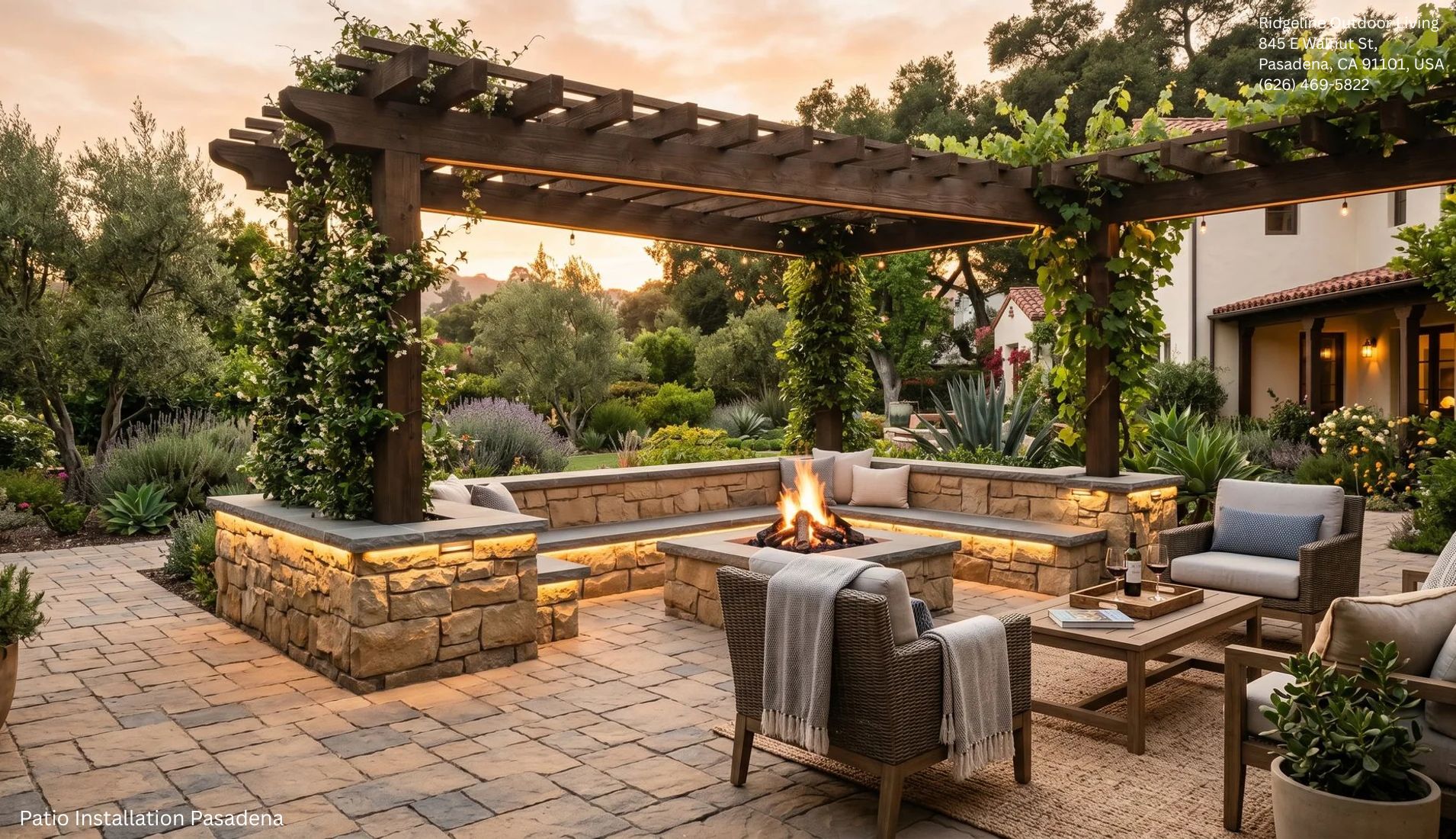
We opened with soil tests that confirmed a layer of firm decomposed granite under six to eight feet of sandy clay fill. The plan used two segmental retaining walls, each about 5.5 feet tall, set 7 feet apart to create a terrace wide enough for furniture and a path. Behind each wall we installed a 18 inch drainage blanket with a perforated SDR 35 pipe sloped to a new curb outlet. A cutoff French drain ran along the base of the upslope neighbor’s yard to intercept sheet flow. Geogrid layers extended back at 0.75 times wall height, and we compacted in 6 inch lifts to spec. Between terraces, we used a mix of lomandra, dwarf coyote brush, and rosemary on drip. Caps doubled as seating along one edge, facing a compact gas fire bowl positioned over a thickened slab and tied into the terrace drainage.
Two years later, including an atmospheric river that dropped more than 6 inches over a long weekend, the walls remain plumb, the drains run clear, and the terrace sees weekly use. The owners say the fire pit is their favorite spot when the air cools. That small square of flat land was paid for by every detail they never see: the base embedment, the filter fabric, the outlet location that does not splash on the sidewalk.
Integrating walls with the rest of an outdoor plan
Retaining walls affect more than erosion. They set the bones for how you use your property. A well placed wall can create a level pad for an outdoor dining space with built in lighting and low planting, or a platform where a pergola offers afternoon shade. If you plan to add an outdoor kitchen - maybe a compact grill island with storage and a small fridge - your designer should load that weight into the wall design from the start. That avoids future footings cutting through backfill or undermining compaction.
Lighting deserves a seat at the table early. Conduit in the wall or through the reinforced soil saves drilling later. Warm, shielded fixtures under caps highlight textures and make stairs safe without glare. If you plan driveway improvements or a path connecting terraces, settle on hardscape materials ahead of time to coordinate finishes and elevations. The value case for these integrated moves is strong, echoing 10 Hardscaping Features That Increase Property Value and 12 Outdoor Living Features That Add the Most Value.
Problems we solve before they appear
Every hillside carries quirks. A long property line with a neighbor uphill and a swale that activates once a decade. A sewer lateral cut through fill at a shallow angle. Historic oak roots that limit excavation. These are not reasons to avoid walls. They are prompts to adapt.
When clearance behind a proposed wall is tight, we shift from geogrid to a concrete stem with a heel compact enough to miss tree protection zones. When seasonal subsurface water appears in test pits, we set deeper drains with cleanouts and plan the outlet where gravity remains on our side. Where access is limited to a side gate, we stage materials for hand carry, we stabilize cuts in shorter sections, and we add days to the schedule rather than rush compaction. If a client wants a solid fence above a wall for privacy, we either design the wall to carry that sail load, or we pull the fence back and build it on its own posts set into a terrace, not on top of the wall.
When to call a pro and what to ask
If your hillside shows scalloped erosion after storms, new cracks in the driveway near the edge, or a fence leaning downhill, it is time to evaluate. For walls under 4 feet without surcharges, a qualified landscape contractor who understands drainage can often design and build a code compliant solution. For anything larger, an engineer should be on the team. Ask how they handle drainage behind the wall, what backfill compaction methods they use, and where the water will discharge. Ask about embedment depth, geogrid lengths if applicable, and how they will protect open cuts if a storm hits mid project. A builder who answers with specific numbers rather than vague assurances is your ally.
If you are tying the wall into a larger plan - an outdoor kitchen from Ridgeline Outdoor Living’s Guide to Outdoor Kitchen Design, a small pool, improved lighting, or a new driveway - say so early. The more we can resolve in design, the fewer surprises appear during inspection, and the better the spaces will flow when complete.
The quiet confidence of a wall built right
Retaining walls do not ask for attention once they are built. They hold the line against erosion, move water where it will not harm, and turn steep ground into usable rooms. On Los Angeles hillsides, that mix of structure and water management is the difference between worrying every time clouds gather and watching rain soak into a landscape that is ready for it. When the details below grade are sound, you enjoy what sits on top - a paver patio that stays level, a garden that takes root, a path your family uses at dusk when the low lights click on.
Ridgeline’s best practice is simple to state and precise to execute: respect the soil, control the water, over communicate about loads, and build the foundation you wish you could see after it is buried. Do that, and you will not only prevent erosion on your hillside, you will gain a series of spaces that make the most of where you live.