How Ridgeline Integrates Lighting, Hardscape, and Plantings for Cohesive Design
Cohesive outdoor spaces rarely happen by accident. They come from reading a site with care, selecting durable materials that speak the same visual language, and shaping light so the landscape looks as good at 9 p.m. As it does at noon. At Ridgeline Outdoor Living, the projects that age gracefully share one trait above all: lighting, hardscape, and plantings are designed as one system, not as isolated features. When these three threads are woven together from the first sketch to the final walkthrough, the result feels inevitable, like the home always wanted to live this way.
How cohesion changes how a space lives
On paper, a patio, a grove of olives, and a series of path lights can check all the boxes. In practice, the question is whether they guide people to gather where the breeze is comfortable, whether the surfaces cool quickly after sun, whether the lighting tempers glare and draws the eye to what matters. Cohesion converts square footage into rooms with purpose. When a hillside yard in Los Angeles needs terracing to fight erosion and an owner dreams of a poolside pergola, structure and mood must be tuned together. Grading affects where the pergola sits. Column footings affect irrigation routing. Plant choices affect reflectance and light levels. Done well, this dance quiets the visual noise, improves safety, and stretches the usable season.
Start with what the site is already telling you
Southern California is a region of microclimates. Two homes five blocks apart often need different plant palettes and drainage strategies. We begin with four baselines: sun path, prevailing wind, soil, and water movement. On a Brentwood lot we documented a 14 degree temperature swing between the upper terrace and the lower lawn over a September afternoon. That alone reoriented the dining area to the slightly cooler zone, which changed how we lit the stairs and where we ran conduit. On clay-heavy sites in the Valley, we plan for French drains and permeable joints in hardscape to relieve hydrostatic pressure. On sandy hillside soils in Malibu, we lean into deep-rooted, drought-tolerant plants to knit the slope while specifying mechanically stabilized earth or geogrid behind retaining walls to satisfy both engineering and city review.
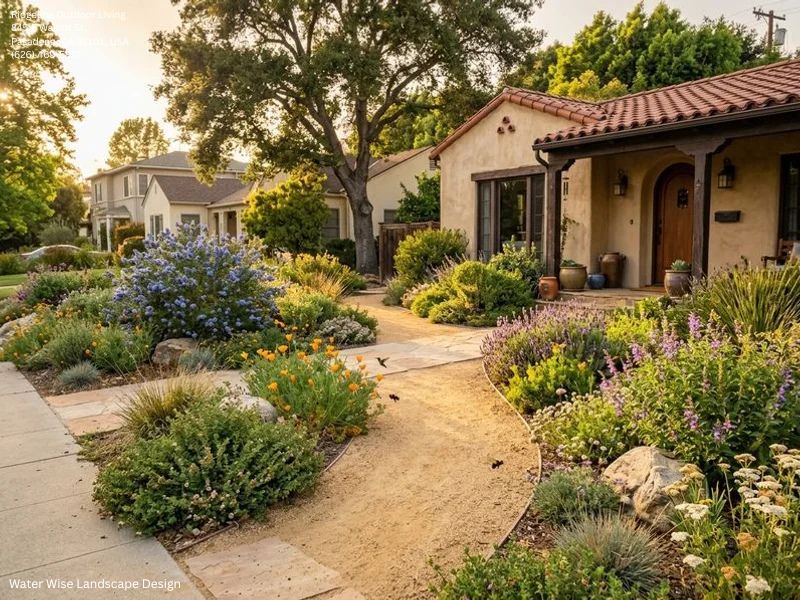
Hardscape is the spine, plantings are the organs, lighting is the nervous system
We approach hardscape as the framework that carries the load, physically and visually. Materials do a lot of talking, so they must match the architecture. Hand-troweled concrete with a light sandblast works with mid-century lines. Large-format porcelain pavers suit a clean, contemporary home and reduce grout maintenance. Natural stone warms a Spanish Revival and ages well, especially when set over a permeable base that prevents efflorescence. Whether we are building a paver patio or a long driveway, the principles are steady. Control water, reduce glare, and scale surfaces to the body.
Business Name: Ridgeline Outdoor Living
Address: 845 E Walnut St, Pasadena, CA 91101, United States
Phone: (626) 469-5822
Ridgeline Outdoor Living
Ridgeline Outdoor Living is a Pasadena-based landscape design-build company serving Greater Los Angeles with custom outdoor living, hardscape, and drought-tolerant landscape solutions. The company specializes in patios, retaining walls, outdoor kitchens, drainage, hillside projects, and turnkey landscape construction, handling projects from design and permitting through final build and warranty.
845 E Walnut St, Pasadena, CA 91101, USA
Business Hours:
- Monday – Saturday: 8:00 AM – 6:00 PM
- Sunday: Closed
Follow Us:
Los Angeles homeowners often compare paver patios vs stamped concrete. Each has merit. Pavers excel when you want modularity and future serviceability. If a tree root heaves or a plumber needs access, individual units lift and reset. Stamped concrete can be cost effective per square foot but demands excellent subgrade prep and thoughtful jointing to dodge visible cracking. In high-heat pockets, color selection matters, as darker slabs can spike surface temperatures 15 to 25 degrees higher than light or textured surfaces. For curb appeal on entry drives, we often blend concrete bands with stone or porcelain inlays to create rhythm, a move pulled from several of our 15 Driveway Paving Ideas to Improve Curb Appeal playbook. That same rhythm repeats in the patio field pattern so the front and back of the house greet guests in the same dialect.
Planting design that earns its keep year round
In a warming, water-conscious region, plantings must be more than pretty. They need to engineer comfort. We rely on layered canopies and plant massing to manage light and wind. A grove of Arbutus marina can filter the western sun without blacking out the yard. Low, drought-tolerant groundcovers like Dymondia, Baccharis pilularis ‘Pigeon Point,’ or Creeping thyme soften pavers, cool the microclimate, and handle foot traffic near lounge zones. For vertical punctuation, we use multi-trunk olives, Western redbuds, or columnar oaks, the choice tied to soil, exposure, and mature scale.
The palette leans water-wise. The Best Drought-Tolerant Plants for Los Angeles Yards come up again and again in our work. Westringia for clipped structure. Salvia clevelandii for fragrance and pollinators. Agastache, kangaroo paw, lomandra, aloe, and aeonium offer texture shifts that show well in raking light. We avoid thirsty lawns unless a client has a defined use, like a small play lawn. Artificial turf vs sod is a recurrent conversation. Turf has minimal irrigation needs and looks clean, but it increases surface heat and requires proper base prep to avoid odors. Sod feels cooler and can be softer on bare feet, but it is water intensive without a smart controller and deep-soak scheduling. Our advice depends on sun exposure, pets, and how often the space hosts events. In some projects we split the difference: a small sod panel for play, framed by drought plantings and permeable hardscape.
Lighting is design, not decoration
If hardscape gives form and plantings supply life, lighting sets pace and hierarchy. We treat it as integral, not aftermarket. The first lighting pass happens while we are still grading. Sleeves run under every path and across every joint we intend to light. Junction boxes hide in planter beds sized to swallow transformer housings. Load calculations ensure no run exceeds recommended voltage drop. We think about light at three scales: navigational, focal, and atmospheric.
Navigational light is safety. Step lights must be low-glare and shielded, especially where palms or landscaping guides glossy leaves can rebound light into eyes. We choose warm white, 2700 to 3000 Kelvin, for most circulation paths. That range makes foliage look healthy and respectful of the home’s interior color temperature. Focal light is for trees, sculptures, or water features. A 20 foot olive might take two to three uplights at 3 to 5 watts each, beams aimed obliquely to catch bark texture and the canopy skirt, not blast the crown. Atmospheric light lives in the margins. A soft wash across a stucco wall. Downlight from a pergola beam, dimmed low to mimic moonlight. Under-cap lighting on a seating wall that whispers rather than shouts. The goal is contrast and restraint. You want dark pockets so the eye can rest.
We design for control. Zones matter. Dining, pool, path, and planting bed lights should dim independently. In older homes without integrated systems, a well-placed transformer with multi-tap outputs and a smart switch can still achieve scene control. We pair this with programmable schedules that track sunset shifts through the year. This solves a practical complaint we hear often from clients who inherited homes that look like an airport runway at 6 p.m. In December and a cave by 8:30 in July.
Where all three meet: the everyday details that make or break a project
Details determine whether an evening on the patio feels composed or piecemeal. We route irrigation mainlines and low-voltage conduits in the same trench where possible, separated by code and good sense, so the site is not riddled with cuts. We set sleeves under driveways at every 10 to 12 feet, even if no fixtures are currently planned there. Future flexibility is cheap during rough-in, expensive later. Coping lights need a path out, so we derate and prewire before stone goes down. Planting beds adjacent to hardscape will grow, so we leave a 6 to 8 inch gravel throat along walls to hide fixtures and control splash back during rain.
Material transitions deserve as much design time as the statement pieces. Where a paver patio meets a groundcover band, we set a steel edge, powder-coated to match light fixture finishes, so the line holds crisp. In hillside yards, retaining walls do double duty. Structurally, they hold the grade and reduce erosion. Aesthetically, they can anchor lighting and seating. On a Pacific Palisades project, we stepped a wall into three terraces. The upper tier took espalier fruit, the middle held a narrow bench with under-cap lights, and the lower opened to an event lawn. The wall returns hid transformer niches with louvered doors for ventilation. When we switched to drought-tolerant plantings on the sunny faces, irrigation dropped by half, and maintenance visits stretched from weekly to biweekly most of the year.
Water management belongs in the first conversation
Los Angeles homeowners often discover they have a drainage problem only when a storm exposes it. French Drains Explained is not the most glamorous topic, but it should be required reading before you set a single paver. We use three layers of defense. First, shape the grade to carry water away from structures and toward infiltration zones. Second, select permeable joints and base systems where traffic loads allow. Third, capture and move water with French drains or area drains tied to legal discharge points. Under a porcelain patio in Studio City, we installed a gravel trench with a 4 inch perforated pipe, sock-wrapped, pitched to a sump with a check valve. The homeowners never think about it, which is the point. The planting design supported the system. Deep-rooted natives stabilized the adjacent slope, while a decomposed granite swale carried overflow to a bioswale planted with Juncus, muhly grass, and irises. Lighting there stayed minimal to protect night insects, with low bollards shielded on the house side.
Outdoor kitchens, fire, and water features that feel like they belong
In a region where outdoor living is a second living room, kitchens, fire pits, and water features show up often. The question we ask is not whether to include them, but how they tie to the larger narrative. Outdoor kitchen trends Los Angeles homeowners are choosing tilt toward durable, heat-resistant surfaces, concealed storage, and zones for prep, cook, serve, and clean. We are straightforward about cost. How Much Does an Outdoor Kitchen Cost in Los Angeles is a range, not a single number. For a built-in grill, side burner, sink, undercounter fridge, and 12 to 16 linear feet of counter, including utilities and a modest shade structure, budgets often start around the mid tens and climb with appliances and finishes. Add a pizza oven or high-end smoker and the envelope expands. Integrate lighting early. We recess linear lights into the overhead structure for task illumination, pair them with dimmable sconces for mood, and orient outlets where cords will not snake across circulation paths.
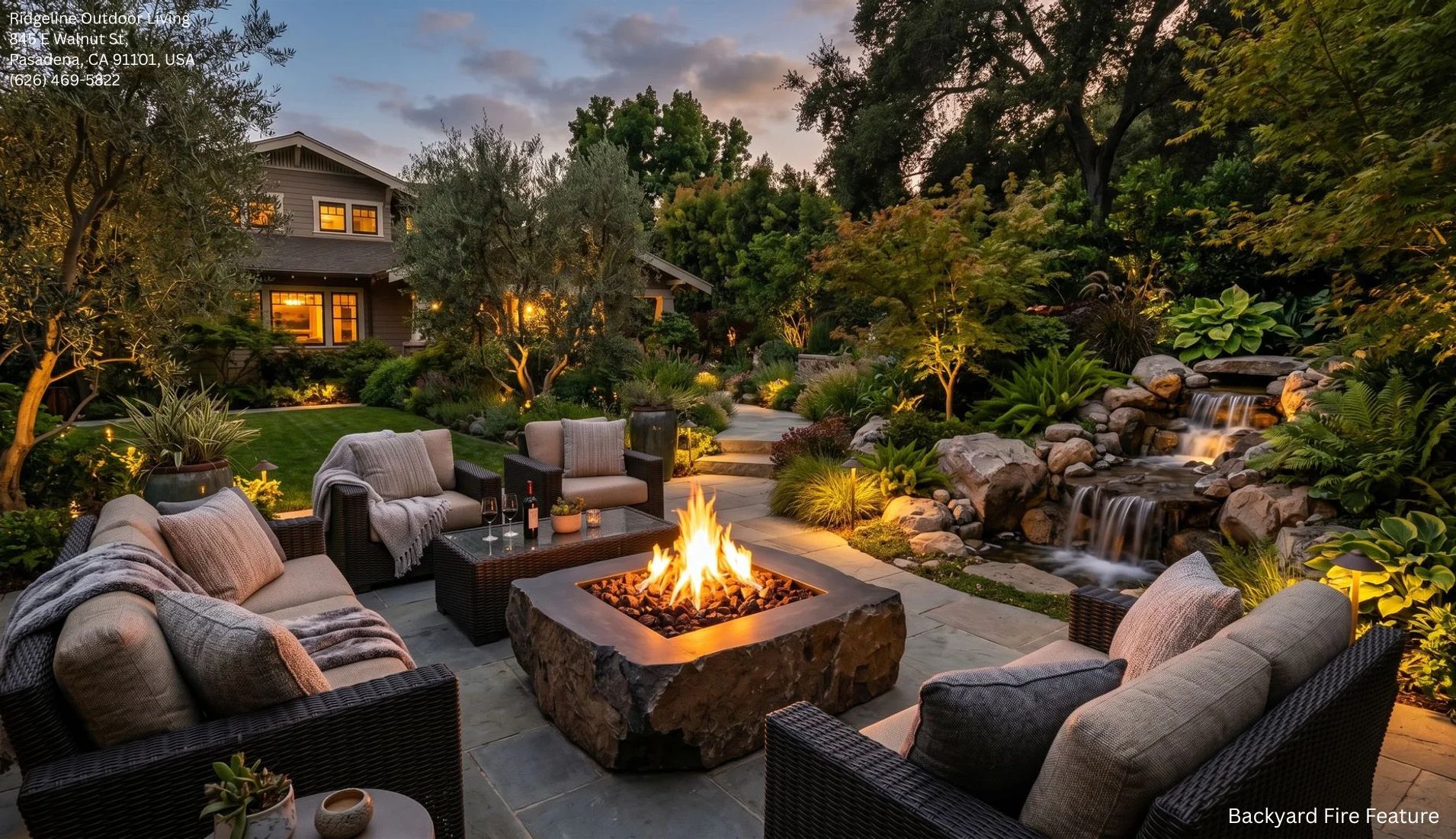
Fire features matter as anchors and as light sources. The 12 Backyard Fire Pit Ideas for Entertaining Year-Round we return to include simple raised rectangles that double as table surfaces and circular sunken pits that screen wind. Where views are precious, we specify low-profile burners with glass wind guards, then light surrounding plantings softly so the flame remains the star. Water features add white noise in neighborhoods with ambient traffic. We keep hydraulics simple for reliability and ensure lighting is separate and serviceable, not potted permanently in concrete where a burned LED becomes a demolition project. A weir blade pouring into a rill cannot share the circuit with step lights if you want independent control.
Hillsides, walls, and code realities
The Complete Guide to Retaining Walls in Los Angeles could consume a treatise. The essence is this. Soil, surcharge, and drainage control design. On hillside properties, retaining walls are often the only honest way to claim flat space. We coordinate with structural engineers early, not after bidders return. That coordination includes lighting and planting points. If a wall must grow to 6 feet, we explore stepping to create planters, then set conduit stubs for future uplights at tree pockets. How Retaining Walls Prevent Erosion on Hillside Properties is not simply about mass. It is about letting water through and around without pressure. Drain mats, weep holes, perforated drains, and clean rock backfill are not optional. Planting gets the last word. Deep-rooted natives and shrubs with fibrous root systems stabilize and shade the wall toe, reducing thermal stress.
Night mockups and the value of iteration
Lighting renders help, but the most instructive moments happen on site with samples. We often stage a temporary lighting mockup before final wire runs. Three to five fixtures, a dusk hour, and a critical eye will refine the entire plan. On a Hancock Park garden, a mockup convinced the owner to cut the number of path lights in half and add two gentle downlights from a mature sycamore. The path became more legible and less cluttered. We keep spare lenses and louvers in the truck so adjustments are immediate. This kind of iteration pays for itself in both aesthetics and equipment cost.
What quality costs and where to spend, where to save
What Does Hardscape Construction Cost in Los Angeles is a question with many variables. Site access, engineering, finish selection, and scope complexity shift budgets. Still, some guidelines help. Driveways with reinforced concrete and decorative bands can land in the tens per square foot, while full paver systems often run higher given base thickness and labor. Patios in porcelain or stone vary with size and edge detailing. If budgets tighten, we would rather value engineer finish square footage than downgrade lighting quality or irrigation hardware. A smaller patio, well lit and well planted, outperforms a sprawling slab with bargain fixtures. Spend on subsurface and infrastructure. Quality base prep, proper drainage, sleeves everywhere, and a robust transformer with capacity for future loads are investments that never look dated.
Five lighting missteps that flatten a beautiful yard
- Over-lighting paths so every ten feet of walkway has a fixture. The result looks like a runway and ruins contrast.
- Using cool 4000 Kelvin lamps in planting zones. Foliage reads gray and harsh, undermining the home’s warmth.
- Placing uplights too close to trunks. You get a glare bomb and hot spots rather than bark texture and canopy form.
- Ignoring shielding and beam control, which causes spill light into neighbor windows and bounces off light stucco walls.
- Powering all lights on a single circuit. You lose scene control and cannot dim or schedule zones for different uses.
These are simple to avoid with early planning and a willingness to test on site. They tie directly to 10 Outdoor Lighting Mistakes That Reduce Curb Appeal, a topic we revisit during design reviews because light has an outsized effect on perceived quality.
Two short case studies from Los Angeles neighborhoods
A hillside Silver Lake lot, 45 feet of fall end to end, demanded terracing. The owners wanted a modest pool, a dining terrace, and edible plantings. The structural engineer specified a pair of retaining walls with geogrid reinforcement. We worked with those bones to carve a dining terrace half a flight down from the kitchen doors so the indoor and outdoor counters aligned height-wise. Lighting rode the structure. Under-cap LEDs Helpful site washed the seat wall. Step lights, shielded, marked risers. Two olives received low-output uplights, each with a hex louver to kill glare from neighbors uphill. Plantings on the south-facing slope leaned desert Mediterranean. Cassia and santolina offered silver and bloom. An herb parterre near the kitchen reduced trips to the store. Irrigation used a hybrid of dripline and point-source emitters, fed by a smart controller tied to local weather. After the first winter storm, the French drains relieved the upper terrace as designed, and the decomposed granite swale handled overflow without rill erosion. The yard feels larger at night because the upper wall disappears into shadow and the lower terraces glow.
On a flat Mar Vista property, family life centered on sports and gatherings. The wish list included a multi-sport lawn, a pergola, and a built-in kitchen with bar seating. Artificial turf vs sod came up early. We recommended a pro-grade turf system over a compacted base with antimicrobial infill to handle heavy use and dogs, paired with a narrow, real-plant perimeter to cool the microclimate and filter runoff. The pergola sat on concrete piers integrated with the patio slab for seismic stability. We wired it for a fan, dimmable task lighting over the prep area, and soft downlights for the bar. The kitchen used a 36 inch grill, a side burner, a sink, and an ice drawer, and came in at a mid-range cost because utilities were close and access was easy. Hardscape finishes matched the home’s stucco in tone, and the porcelain paver selection echoed that color with a cooler undertone to temper summer heat. For planting, we chose Lomandra, dwarf olives, and a pair of citrus in large pots. The evening scene reads as a single room. The pergola throws a gentle pool of light, the turf stays in shadow except along the path, and the citrus catch just enough highlight to pull you across the yard.
Maintenance that protects the design
A cohesive landscape holds value only if maintenance respects the original intent. We give clients a one-page lighting tune-up note. Clean lenses and check aim twice a year. Reset timers seasonally if not automated. Replace any mismatched lamps so color temperature remains consistent. For irrigation, we schedule a spring audit. Flush filters, test zones, and adjust for canopy growth that now shades sensors. With drought-tolerant landscaping, deep and infrequent remains the rule. New plantings get more frequent water until established, then shift. Hardscape perimeters need weeding and occasional polymeric sand replacement where applicable. Sealer schedules vary by material. Many porcelains need none, while natural stone may benefit from a breathable sealer every few years. These small tasks pay big dividends in curb appeal and in the daily feel of the yard.
The coordination checklist we run on every integrated project
- Confirm all conduit and irrigation sleeves before any slab, wall footing, or paver compaction is complete.
- Map lighting zones to switches and dimmers early, including transformer locations with ventilation and access.
- Select plant species with mature sizes that respect sight lines, fixture beams, and wall clearances.
- Align hardscape module sizes with fixture spacing, drain locations, and furniture footprints to avoid awkward cuts.
- Verify drainage paths with a hose test before final finishes, then adjust grading or inlets while changes are easy.
The discipline of this checklist keeps late surprises to a minimum and allows teams in the field to make fast, correct decisions without waiting on redesign.
Why cohesion adds measurable value
There is a reason lists like 10 Hardscaping Features That Increase Property Value and 12 Outdoor Living Features That Add the Most Value highlight integrated patios, lighting, and low-water landscapes. Appraisers notice maintenance simplicity and visual consistency. Buyers feel night usability and the absence of problem spots. More to the point, homeowners live better. A resort-style backyard is not about extravagance so much as frictionless flow. When grade, material, planting, and light agree, people stay outside longer, invite friends more often, and use every corner of a property. That is the test that matters.
Cohesion is also an act of respect for a place. Los Angeles offers sun, views, and an outdoor season that stretches across months. When we integrate lighting, hardscape, and plantings thoughtfully, the result reads as calm and complete. The work behind it is careful, technical, and often invisible. The reward is a landscape that welcomes you in daylight, then again after dark, with equal grace.