Lighting for Lifestyle: Ridgeline’s Outdoor Illumination Ideas that Wow in LA
Los Angeles does not go dark so much as it shifts mood. Sunset falls behind the Santa Monicas, marine air slips inland, and backyards turn into rooms with softer ceilings. When we design lighting at Ridgeline Outdoor Living, we think in terms of how a space should feel at 8:30 on a warm June night, or on a cool January evening when friends gather around a fire pit. The technical details matter, but the point is lifestyle. Good lighting makes outdoor life easier, safer, and more beautiful without shouting for attention.
How Ridgeline approaches light in Los Angeles
Los Angeles backyards are not one type of canvas. A Venice bungalow has salt in the air and tight side yards. A Sherman Oaks ranch lives under mature jacarandas and long eaves. A Silver Lake hillside lot might stack patios and retaining walls over a short run. We start with use. Where do you cook, eat, lean, cut across, pause to look at the skyline? Then we layer light so each scene can shift.
A typical design breaks into discreet zones that operate independently. The dining terrace might hold at 20 to 30 foot-candles at table height for comfort, while lawn edges fall to 1 to 3 foot-candles to suggest the boundary without glare. Steps get task-level visibility. Focal accents pull the eye across the composition. If you never adjust a dimmer and everything looks good, we did our job.
Getting color right
Color temperature sets mood as much as lumens. Los Angeles nights read warmer than, say, Denver. Off stucco and warm stone, 2700 K LEDs flatter skin and evening meals. On olive foliage, 3000 K creates punch without looking icy. For modern, minimal landscapes with architectural concrete and steel, 3000 K consistent across the field keeps the palette clean.
We typically reserve 2700 K for gathering zones, lounge seating, and where you want that indoor-to-outdoor continuity. Path and step lights often land in 2700 to 3000 K depending on plant species and hardscape tone. Water features ask for nuance. Cooler 3500 K or a crisp 4000 K can make water sparkle, but we balance it with adjacent warm accents so it does not read clinical. Mixing temperatures demands discipline. Two temperatures per project is usually plenty unless a water feature sits far enough from seating to stand alone.
Beam control and brightness that serve people, not fixtures
Homeowners often ask for more fixtures when what they really need are better optics. A 3 watt LED with a 10 degree narrow spot can reach a 20 foot olive example better than a 7 watt flood that wastes light on the ground. For uplighting trees, we favor narrow to medium beams with adjustable shrouds and louvers. On facades, grazing washes texture. Where you want shadow play, stand fixtures 12 to 24 inches off the wall and angle steeply upward. Where you want even reveal, tuck close and use a wider beam.
Brightness reads relative. A path feels gently lit at 10 to 30 lumens per foot when surrounding zones hold low. If the deck under a pergola pushes to restaurant levels, that same path will look underdone. We typically size transformers and zones to allow 10 to 40 percent dimming headroom so you can find equilibrium once furniture, plants, and people are in place.
Materials that survive the coast, canyons, and heat
Southern California’s microclimates make fixture choice more than a catalog exercise. Near the coast, salt eats cheap metals quickly. Marine-grade stainless steel or true cast brass with robust powder coat lasts local landscaping companies in Pasadena far longer than aluminum imports with thin paint. In canyons and hillside properties, hardware needs to hold alignment after a season of soil movement. We use deeper stakes, thread-lock on aiming screws, and fixtures with gaskets that keep dust out.
Business Name: Ridgeline Outdoor Living
Address: 845 E Walnut St, Pasadena, CA 91101, United States
Phone: (626) 469-5822
Ridgeline Outdoor Living
Ridgeline Outdoor Living is a Pasadena-based landscape design-build company serving Greater Los Angeles with custom outdoor living, hardscape, and drought-tolerant landscape solutions. The company specializes in patios, retaining walls, outdoor kitchens, drainage, hillside projects, and turnkey landscape construction, handling projects from design and permitting through final build and warranty.
845 E Walnut St, Pasadena, CA 91101, USA
Business Hours:
- Monday – Saturday: 8:00 AM – 6:00 PM
- Sunday: Closed
Follow Us:
Heat matters. LEDs like to run cool, and a fixture’s ability to shed heat affects color stability and life. In exposed south and west faces, we specify luminaires with generous aluminum heat sinks and avoid overdriving emitters. On synthetic turf, we avoid close-range uplights that can create heat spots. It is not common, but we have seen hot beam centers soften turf fibers if a narrow spot sits within a foot.
The LA layer cake: ways we light for how Angelenos live
Evenings here slip across a lot of ground. Dinner outdoors in February is common. So is a late summer swim. A house that entertains year-round needs a different plan than one used for quiet reading.
Outdoor kitchens and dining: Task lighting belongs exactly where the knife touches the board and where the grill lid opens. We mount warm 2700 K or 3000 K downlights under pergolas or overhead structures and add high CRI tape lights under counter edges for soft spill. Avoid glossy countertops under bright beams, which produce glare. Expect a quality 12 to 16 foot run of outdoor-rated, aluminum-channel tape lighting with diffusion to cost a few thousand dollars installed, including a dedicated low-voltage driver and dimmer that lives with the kitchen zone. If you are budgeting broadly for a kitchen, the question How Much Does an Outdoor Kitchen Cost in Los Angeles? Usually lands in ranges from the mid tens of thousands into six figures. Lighting is a small percentage of that, but it pays dividends in every use.
Fire features: 12 Backyard Fire Pit Ideas for Entertaining Year-Round often start with flame as the hero. Our rule is to light the approach, not the flame. Steps, seat walls, and the egress path get low, warm levels so the fire’s dynamic light remains center stage. We sometimes add a cool accent two zones away to hold depth, but not so bright it competes. Allow a minimum 36 to 48 inches of clearance around movement paths so guests do not brush fixtures or cords.
Water features: Los Angeles clients love sheets, scuppers, and rills that run quietly. We backlight falling water with linear submersible strips or point narrow beams through the sheet from the side. Cool 3500 K gives sparkle, but we often warm the surrounding plant palette to 2700 to balance temperature. Pay attention to glare from interior spaces. At night, a bright weir aimed toward the kitchen window feels harsh. Offset and aim away from primary indoor sightlines.
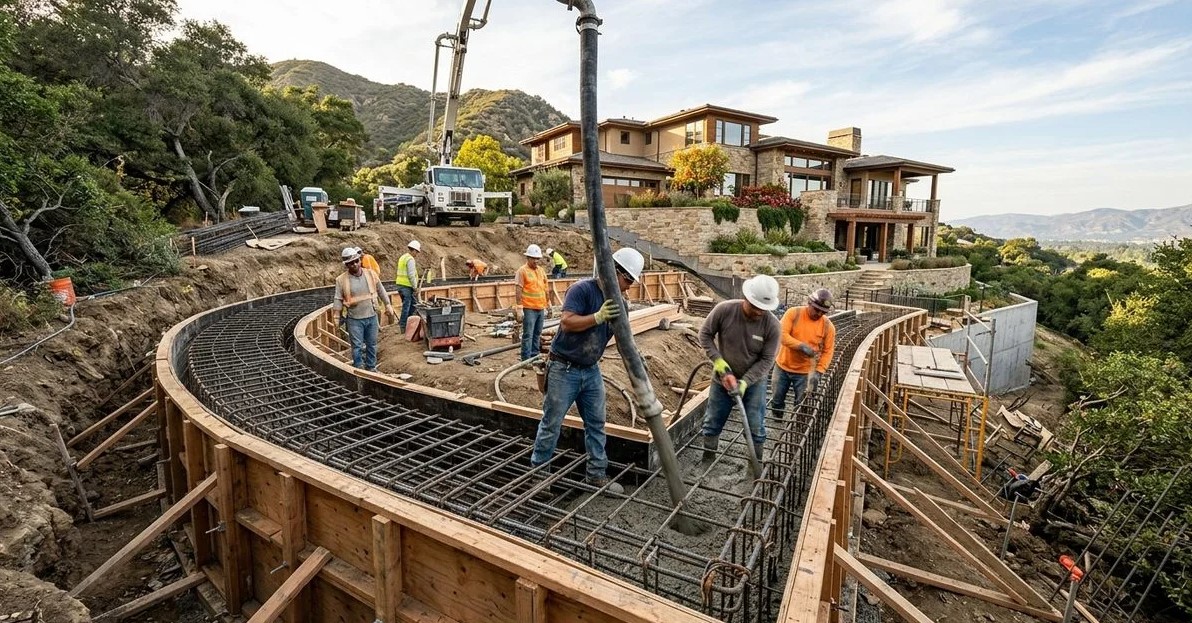
Hillside steps and retaining walls: On The Complete Guide to Hillside Landscaping in Los Angeles, light follows safety first. We embed low-profile step lights on alternating risers or tuck mini shrouded fixtures beneath stair noses. For Retaining Walls for Hillside Properties: What Homeowners Need to Know, downlighting with paver-cap lights can be elegant, but leaves hot spots if placed too close. We prefer fewer luminaires with wider distribution and careful spacing. Voltage drop can become an issue across long hill runs. We upsize wire gauges to 12 or even 10 AWG and home-run critical circuits back to the transformer to avoid dim zones.
Driveways and arrival: 15 Driveway Paving Ideas to Improve Curb Appeal usually focus on materials. Lighting seals the effect. We avoid runway strips. Instead, aim modified accent lights into low shrubs to reveal texture along the drive, use 2700 K markers at key turns, and add a soft wash to the garage face that does not spill across the neighbor’s window. On Most Popular Driveway Materials in Los Angeles, darker pavers demand less brightness than lighter concrete to read at night. For security, keep vertical glare low so drivers can see pedestrians and pets.
Pergolas and covered patios: Pergolas vs Covered Patios: Which Is Right for Your Home? Ties into light control as much as shade. A solid cover gives you ceiling real estate for discrete downlights and fans with integrated LED kits. A slatted pergola asks for creative indirect solutions such as perimeter uplight that bounces off a painted header or concealed tape in beams to blur light. Dimming is mandatory or these spaces feel like showrooms.
Paver patios and embedded accents: 15 Paver Patio Designs Los Angeles Homeowners Love often include in-paver luminaires. We limit them. In-paver dots get hot to the eye and show dirt quickly. A better move is to graze low walls and plant beds that frame the patio. If paver lights are used, choose frosted lenses with tight photometrics and space farther apart than you think, typically 8 to 10 feet, to avoid an airport effect.
Landscape accents: 10 Outdoor Lighting Ideas for Los Angeles Landscapes can inspire all kinds of tricks. We backlight specimen aloes to cast sculptural shadows, float light off the undercanopy of citrus trees to read fruit, and use tight beams to pick agave tips. For The Best Drought-Tolerant Plants for Los Angeles Yards, muted blues and silvers of salvias and artemisias enjoy angled light, not direct downlight that flattens their texture.
Controls you will actually use
Smart systems solve problems when they are simple. We group zones logically. Kitchen and dining usually live on their own dimmer. Paths and steps share an astronomical timer to switch on at landscaping guides sunset and dim to 30 percent after midnight. Accent scenes for trees and sculptures can sit behind a keypad button, but keep the control vocabulary short. If you do not remember which scene is which by the second week, it is too complicated.
California energy code influences control choices. Requirements evolve, but high efficacy sources and basic controls, such as vacancy or motion sensors for certain circuits, are common. We keep fixtures Title 24 compliant where it applies and coordinate with your electrician, especially when line-voltage luminaires join low-voltage zones.
Power, safety, and the quiet math behind pretty light
Low-voltage LED systems drive most residential projects because they are efficient, safe, and flexible. A few notes from the field:
-
Keep transformer sizing conservative. Start by adding the wattage of all luminaires on a run, then select a transformer with 20 to 30 percent headroom so dimming circuits and future fixtures have capacity. On long hillside runs, split into multiple home-run circuits or use multi-tap transformers to compensate for voltage drop.
-
Respect wet location ratings. Fixtures must be listed for wet locations outdoors. Junction boxes need gaskets and proper wire nuts designed for direct-burial splices. If a fixture claims IP68 submersion rating for water features, verify it with the spec sheet, not a carton sticker.
-
Use GFCI protection for all exterior line-voltage receptacles and transformers. Mount transformers where they stay dry and ventilated, ideally under a cover or equipment niche that is accessible.
-
Aim low and shield. Glare control is not just a courtesy, it is function. Shielded path lights and shrouded uplights keep light where it belongs and preserve your night vision for steps and changes in grade.
-
Plan maintenance. Even quality LEDs and lenses need cleaning once or twice a year in dusty canyons or under flowering trees. Schedule seasonal checks when irrigation timing shifts or water features winterize.
Budgeting that matches goals
A modest courtyard with path lighting, a few accents, and step lights might start around the mid four figures, installed with a reputable, serviceable system. Larger properties with multiple terraces, hillside steps, water features, and integrated controls can enter the tens of thousands. Pool landscapes with code-driven separations and water-rated fixtures add cost. Compare that to other line items in 10 Backyard Upgrades Worth the Investment and you will find lighting often sits at the low end of budget but the high end of perceived quality.
If you are calculating What Does Hardscape Construction Cost in Los Angeles, assume lighting at 8 to 15 percent of the hardscape number for well-integrated results. Lighting shines when it is designed with pavements, walls, and planting, not tacked on. We often run conduits and sleeves before concrete or pavers go in so that a future accent can be added without cutting.
Preventing the common pitfalls
Successful projects come from early coordination and restraint. The biggest missteps, again and again, are simple to avoid.
-
A quick planning checklist:
-
Map circulation first. Light the ways people move before you light what looks pretty.
-
Decide color temperature zones early and stick to them.
-
Rough in conduits and junction boxes before hardscape pours or walls are capped.
-
Group fixtures into control zones you can name without labels.
-
Build dimming headroom into every lighting circuit.
-
10 Outdoor Lighting Mistakes That Reduce Curb Appeal, distilled to five:
-
Overlighting. Brighter is rarely better. It flattens texture and invites glare.
-
Mismatched color temperatures. One cool flood next to warm accents makes everything feel off.
-
Runway paths. Evenly spaced dots look artificial. Stagger, tuck, and vary distances.
-
Unshielded uplights. Bare lamps draw the eye and reduce night vision.
-
Ignoring neighbors and windows. Aim away from bedrooms, reflect on glass, and avoid bright direct views.
Working with water, grade, and drainage
Lighting does not live alone. It threads through irrigation, drainage, and site utilities. When we solve Common Landscape Drainage Problems and Their Solutions, lighting choices can either help or hinder. For example, French Drains Explained: Protecting Your Property From Water Damage often includes gravel trenches and catch basins. We route low-voltage lines under or around those trenches in protective conduit and leave service loops so a clogged basin can be excavated without cutting the circuit. In flood-prone corners, junction boxes go high on walls or posts, not at grade, and we specify fixtures with higher ingress ratings.
On hillside properties, How Retaining Walls Prevent Erosion on Hillside Properties links to lighting in a quiet way. If a wall weeps or the backfill stays damp, we avoid in-wall fixtures that would introduce penetrations. Instead, we mount grazers under caps or use ground-mounted accents with stakes set into compacted base. For The Complete Guide to Retaining Walls in Los Angeles, integrate low-voltage sleeves through walls during construction so future lights can be added without coring.
Planting, water, and the drought conversation
The Ultimate Guide to Drought-Tolerant Landscaping in Los Angeles matters at night too. Plants with fine texture like feathery muhly grass translate beautifully with cross light that catches seed heads. Bold forms like agaves and aloes read as sculpture when lit from below and slightly behind to paint their edge. Why Drought-Tolerant Landscaping Is a Smart Investment includes maintenance and water savings, but it also opens palettes that yearn for shadow play. Keep emitter placement in mind. Spray hitting a hot lens can spot or crack it over time. Drip and subsurface irrigation play nicer with fixtures.
Artificial Turf vs Sod: What’s Best for Los Angeles Homes? Has a lighting footnote. Turf does not like frequent stake moves, and it can reflect harshly under cool light. Use warm, shielded sources, and pick fixture locations before turf installation. In natural sod or groundcover, small relocations are forgiving as plants grow.
Integrating with outdoor rooms
Designing the Perfect Outdoor Dining Space frequently starts at the table. The best nights balance vertical and horizontal light. Your face should be visible across the table without overhead glare or hard shadows. We combine soft downlight with lanterns or candles that dance. Ridgeline Outdoor Living’s Guide to Outdoor Kitchen Design addresses pathways to and from the dining zone. Those transitions matter because the human eye adapts slowly. Keep light ratios gentle from one space to the next.
If you are considering 12 Backyard Entertainment Features Every Homeowner Should Consider, lighting is the glue. A putting green needs even, low levels so contours stay visible. A bocce court runs best with offset pole or fence downlights that keep the ball’s shadow easy to read. For Pool Landscaping Ideas for Los Angeles Homes, swim steps, handholds, and edges benefit from warm, shielded light that avoids the waterline when not using submersible fixtures. Glare on still water feels harsher than on grass.
A note on property value and restraint
10 Hardscaping Features That Increase Property Value tends to rank lighting high because it changes how a property shows at every hour. But more fixtures do not equal more value. Appraisers and buyers respond to coherent scenes, safe passage, and a sense of place. We often remove as many fixtures as we add during renovations. Plant growth, new walls, or a different furnishing layout can make old lights redundant. Editing is design.
What to ask before you hire
The same discipline you would bring to 10 Questions to Ask Before Hiring a Landscape Contractor applies here.
Ask to see a live demonstration. We often stake temporary fixtures on a portion of the yard and run them at dusk. Nothing substitutes for seeing how a palo verde’s shadow hits your wall or how step lights look in your eye line.
Ask about maintenance. Who cleans lenses? Who adjusts the aim after a Santa Ana wind event? Will your system be serviceable in five years with parts available?
Ask about controls. Will your lighting integrate with the platform you already use for interior scenes, or do you prefer simple, stand-alone dimmers and timers?
Ask about wire management and splicing details. Neat work now saves hours later.
Case notes from the field
A Studio City client with a mid-century home thought she needed twice as many path lights as we suggested. We installed seven instead of fourteen and shifted two uplights to catch the undersides of mature oaks. The path read brighter because the canopy lit softly overhead, and the ground lights could drop to 40 percent output. Her electric usage for landscape lighting stayed under 60 watts during typical evenings, about the same as a single incandescent table lamp once used indoors.
In Pacific Palisades, a salt-heavy breeze kept corroding fixtures within a year. We switched to cast brass with a specific marine-grade finish and used stainless fasteners. We also revised aiming so beams skimmed plants instead of hitting solid walls head-on, reducing salt crystallization on lenses. Three years later, the system looks new with seasonal rinses.
On a Silver Lake hillside, voltage drop created a dull far terrace. We corrected by running a second home-run cable from the transformer and balancing loads by zone. It is common for an initial install to underestimate wire length and fixture grouping on vertical properties. Small electrical tweaks can make a large visual difference.
Bringing it together without calling attention to itself
A well-lit Los Angeles landscape feels like a quiet conversation. Eye lines drift from warm scenes to soft edges, and the house seems to breathe more easily after sunset. Whether your project focuses on 12 Water Feature Ideas for Luxury Los Angeles Backyards, a new paver terrace, or How Ridgeline Outdoor Living Creates Functional Outdoor Living Spaces with a full design-build scope, start with how you want to live, not how many fixtures will fit.
If you remember one principle, let it be this: light for people first, then for plants and walls. Everything else is method.