Ridgeline Outdoor Living’s Design-Build Process: Transforming Los Angeles Backyards with 10 Outdoor Living Ideas
Los Angeles is hard on average landscapes. Sun can be intense nine months of the year. Lots in the hills bring slope, views, and soil movement. Even the flat parts of the Valley have clay that swells and shrinks with moisture. Done well, a backyard in this climate becomes a second living room that earns daily use. Done hastily, it bakes through summer, floods once a year, and cracks by year three. Ridgeline Outdoor Living’s design-build approach exists to solve for this reality, not in spite of it.
What design-build looks like when it is done right
You should feel a steady hand from the first conversation to the last joint sweep of polymeric sand. The power of design-build lies in accountability and continuity. One team sets the vision, details the plans, pulls the permits, and installs the work, which means fewer handoffs and fewer surprises. In Los Angeles, where hillside ordinances, tree protections, and water restrictions are normal, that continuity saves weeks.
Here is how our typical project moves from idea to everyday use:
- Discovery and site study: goals, budget, sun and wind patterns, utilities, slope, soil, drainage history
- Concept and cost modeling: multiple layout options with early pricing bands to avoid sticker shock
- Technical design: grading, drainage, structural details, materials, lighting circuits, gas sizing, permits
- Build and quality control: phasing, inspections, mockups, and punch lists to protect schedule and finish quality
- Care plan: plant establishment, hardscape maintenance, seasonal irrigation adjustments
On a Mar Vista project last spring, the client wanted a shaded dining court, an outdoor kitchen, and a small plunge pool. Early shade studies showed late afternoon heat pouring over their fence line. We pivoted the dining area 14 feet, rotated the pergola, and added a privacy trellis that now catches the sunset while keeping the table comfortable. No change orders, no rework, just good planning that holds up in July.
The site tells the truth
Los Angeles backyards vary wildly over short distances. A Hancock Park lawn has different problems than a Studio City slope. Before shapes and finishes, we test soils where needed, dig to see what is under existing patios, and map water paths during a hose test. If you see telltale salt crusts on concrete or mildew lines on a block wall, you have a drainage story to solve. French drains, area drains tied to a sump, or regrading are not glamorous, but they protect the investment. In LA we typically budget 45 to 80 dollars per linear foot for French drains that are done the right way, with washed stone, filter fabric where appropriate, and proper discharge. Skipping drainage is how you get heaving pavers, algae slicks, and stressed plants. The best patios start below ground.
Ten outdoor living ideas that change how Angelenos use their yards
1. Paver patios that set the room
A paver patio is more than a surface. It is a room without walls that handles heat, foot traffic, and the occasional party spill. We use different paver modules to zone spaces without a single step, then repeat a banding pattern to visually stitch the yard together. Los Angeles homeowners tend to love three families of looks: modern large-format rectangles with tight joints, classic tumbled cobbles that feel at home on Spanish or Tudor homes, and transitional plank pavers that mimic long wood boards. The range is why “15 Paver Patio Designs Los Angeles Homeowners Love” is not an exaggeration, it is a weekly reality on our sample carts.
On cost, high quality paver patios in LA often land between 18 and 35 dollars per square foot installed, depending on paver selection, pattern complexity, and edge restraints. Compare that with stamped concrete at roughly 12 to 22 dollars per square foot installed. “Paver Patios vs Stamped Concrete: Pros and Cons” comes up in nearly every consult. Stamped concrete gives a continuous slab that can look sleek at install, but it cracks where soils move. Repairs are patchwork. Pavers flex at the joints, individual units can be lifted and reset, and color runs through the piece. For long term maintenance on expansive clay soils, pavers age more gracefully.
2. Outdoor kitchens that cook like the main one
Angelenos cook outside all year. We design kitchens to support that, not just grill islands that look good in a listing. A working layout has prep, cook, and landing zones. We locate the sink and trash where you stand by default, and we size venting so smoke goes up, not into your neighbor’s bedroom window.
“How Much Does an Outdoor Kitchen Cost in Los Angeles?” depends on utilities and finishes. For a straight 10 to 12 foot run with a 36 inch grill, side burner, compact fridge, doors and drawers, and stucco or stone veneer, expect 25,000 to 45,000 dollars. L shapes with a pizza oven, ice maker, and Dekton or porcelain counters usually cross 50,000. Full u shaped kitchens with custom steel frames, sink with hot and cold, warming drawer, and overhead structure can sit in the 65,000 to 85,000 dollar range. Gas line extensions, electric panel upgrades, and trenching lengths are the hidden drivers. Our “Ridgeline Outdoor Living’s Guide to Outdoor Kitchen Design” leans heavily on early utility planning for that reason.
Current “Outdoor Kitchen Trends Los Angeles Homeowners Are Choosing” include porcelain slab counters that shrug off wine and citrus, matte black appliances on architectural homes, landscaping guides and built in planchas for vegetable heavy menus. We still install plenty of stainless, but the palette has moved more contemporary over the last five years.
3. Fire features that earn their footprint in August and January
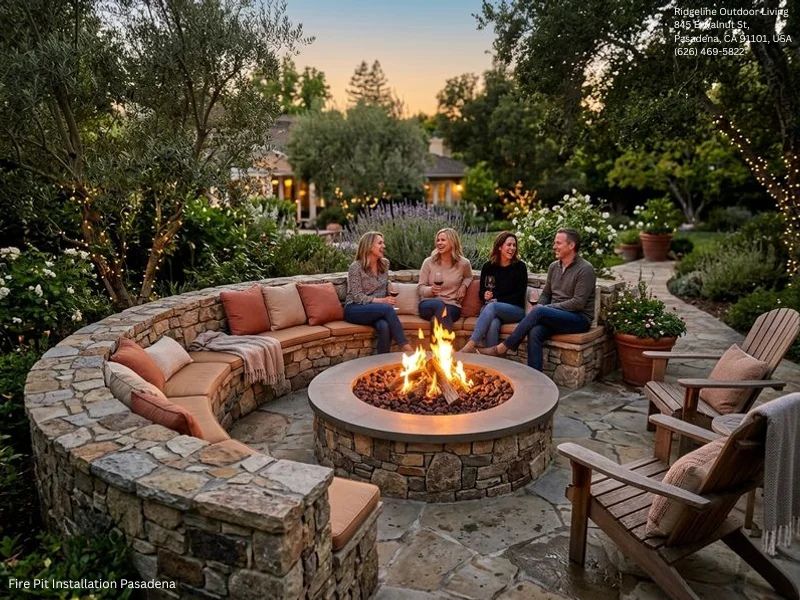
There are a dozen viable ways to gather around flame, even on small lots, which is why “12 Backyard Fire Pit Ideas for Entertaining Year-Round” is a practical brief rather than a mood board. Flush fire ribbons along a low seat wall keep sightlines open to views. Linear fire tables pair well with long sectionals on narrow patios. Round sunken pits create intimacy on larger lots. We favor natural gas for clean burn and instant on, with adjustable valves that let you dial heat for a late May evening or a chilly Santa Ana night.
Clearance to structures matters. We keep 7 feet of overhead clearance to open rafters, check manufacturer specs closely, and coordinate with insurance guidelines. Fire bowls near pools double as wind buffers, cut glare on water, and gently warm swimmers stepping out at night.
4. Pergolas vs covered patios, which is right for your home
Both structures create shade, anchor furniture, and shape the space. The decision often comes down to microclimate and architecture. A pergola with slats, even with motorized louvers, still breathes. That is perfect on the Westside where onshore breezes keep afternoons civil. In deep Valley heat, a solid roof with insulation reduces radiant load and makes July dinners comfortable.
Here is a quick comparison we share with clients:
- Pergolas: lighter look, faster approvals, lower cost, flexible shade, great for vines and dappled light
- Covered patios: all weather use, integrated lighting and fans, better heat control, higher structural and permit requirements
- Materials: aluminum for low maintenance, steel for long spans and slim profiles, wood for warmth and easy custom detailing
- Cost bands: 8,000 to 25,000 dollars for simple pergolas, 25,000 to 60,000 dollars for covered patios depending on roofing, electrical, and finishes
- Placement: align with doors for everyday use, or offset to frame a view and build a real destination
Los Angeles homeowners are investing in custom pergolas that match window mullions and stucco color, then layering outdoor drapery for late afternoon privacy. It reads tailored, not tacked on.
5. Drought tolerant planting that still feels lush
“The Ultimate Guide to Drought-Tolerant Landscaping in Los Angeles” is, at heart, about smart plant communities and soil. A water wise yard can be lush if you match exposure, water needs, and root depth. On a Santa Monica bungalow, we combined Arbutus ‘Marina’ for canopy, Leucophyllum, Salvia ‘Pozo Blue’, and Lomandra ‘Breeze’ as the middle, and a ground layer of Dymondia and thyme. Deep drip lines set at planting and mulch at 3 inches reduced water use by more than half compared with the original fescue.
“The Best Drought-Tolerant Plants for Los Angeles Yards” usually includes manzanita varieties, Westringia, Muhlenbergia, Ceanothus, Crape myrtle for seasonal color, and olives where allowed. Tie plants to hydrozones on separate valves, then program the controller seasonally. We run a three day per week schedule during establishment only, then pull back hard in year two. Water wise designs are a smart investment in LA’s rate structure and long term reliability.
6. Water features that cool the air and quiet the city
Moving water masks street noise and drops felt temperature in small courtyards. “12 Water Feature Ideas for Luxury Los Angeles Backyards” is not hyperbole when you count scuppers into troughs, basalt columns, rill channels hugging a path, or a runnel that edges a dining area. On one Brentwood lot, a 20 foot rill runs from the spa overflow along a seat wall and ends in a stainless weir. It sounds like a small creek, not a pool pump.
Even compact features need planning. We design splash zones to avoid staining, run dedicated GFCI circuits, and set autofill with backflow prevention to meet code. For finishes, white noise sheets over honed limestone read modern, while stacked stone with intermittent spills suits more rustic architecture.
7. Outdoor lighting that elevates and protects
Good lighting reads like a gentle gradient, not a spotlight at every tree. “10 Outdoor Lighting Ideas for Los Angeles Landscapes” usually includes grazing stucco walls for texture, low glare step lights on stairs, downlights from structures for moonlight effect, and edge lights along paving to define movement. We avoid path light farms that look like runway markers. Instead, we light what you need to see and what you came to enjoy.
We also see “10 Outdoor Lighting Mistakes That Reduce Curb Appeal.” The big ones are over-bright fixtures that flatten the yard, blue color temperatures that feel clinical, and unshielded uplights that glare from the street. In LA, we specify 2700K LEDs for warmth, dimmable transformers for flexibility, and brass or marine grade aluminum housings that handle coastal air. Wired correctly with waterproof connectors, a lighting system should run for many years with just occasional lamp replacements.
8. Driveway upgrades that lift curb appeal and function
“15 Driveway Paving Ideas to Improve Curb Appeal” span from simple soldier course paver borders on a concrete drive to full permeable systems that capture stormwater. In Los Angeles, “The Most Popular Driveway Materials” remain concrete, concrete with exposed aggregate, concrete pavers, and porcelain pavers on drive rated systems. Permeable paver drives earn their keep on lots with tight stormwater allowances, and they look crisp when detailed with flush curbs and clean transitions.
Paver driveways typically cost more upfront than broom finish concrete, but they repay it in reparability and curb appeal. For a 700 square foot drive, expect 14,000 to 28,000 dollars for pavers, versus 8,000 to 18,000 for concrete depending on thickness, steel, and finishes. Ribbon drives, with twin wheel strips in pavers or concrete flanking a planted center, save materials and soften the facade. Where parking is tight, we often widen aprons subtly and taper edges to protect street trees and meet transportation rules.
9. Retaining walls and hillside landscaping done with engineering and restraint
Hillside properties are prized for views and breezes, but they bring geotechnical reality. “Retaining Walls for Hillside Properties: What Homeowners Need to Know” starts with understanding surcharge, drainage, and soils. Dry stacked stone is decorative above grade, not a retaining system where a slope is pushing. We commonly build geogrid reinforced segmental walls, poured in place concrete with proper footing and weep drains, or masonry units with steel and grout. Costs vary widely, but a realistic band in Los Angeles for engineered retaining walls is 60 to 120 dollars per square foot of face, more when access is tight or heights top 6 feet.
“The Complete Guide to Hillside Landscaping in Los Angeles” emphasizes terracing for usable spaces and careful planting to knit slopes together. Deep rooted natives like Arctostaphylos and Ceanothus help stabilize topsoil. “How Retaining Walls Prevent Erosion on Hillside Properties” is often about getting water behind the wall to daylight via perforated drains, avoiding hydrostatic pressure that can cause bulges or failure. Tie that to surface grading above so roof drains do not dump onto a slope.
10. Lawns, or not: artificial turf vs sod in a Mediterranean climate
“Artificial Turf vs Sod: What’s Best for Los Angeles Homes?” depends on use, feel, and maintenance appetite. Families with high traffic and dogs appreciate turf that drains consistently and stays green. Gardeners who enjoy seasonal change and cool footing often prefer a real grass patch.
A fair cost comparison in LA: quality artificial turf installed with proper base, seams, and infill typically runs 12 to 22 dollars per square foot. New sod with irrigation upgrades might come in at 5 to 12 dollars per square foot. Over five to seven years, turf can pencil out if water and mowing costs are high, but it gets hot in direct sun, and quality varies sharply. “Artificial Turf Installation: Everything Los Angeles Homeowners Should Know” includes base prep to 4 inches in most soils, plate compaction in lifts, nails and seam tape done cleanly, and infill choice that tempers heat. For sod, Bermudagrass hybrids handle heat and traffic, tall fescue stays greener in winter but needs more water, and seashore paspalum fits coastal zones. A small, well shaped lawn is often the sweet spot.
Hardscaping features that add value, not just cost
Not all upgrades return the same. “10 Hardscaping Features That Increase Property Value” usually points to cohesive patios that extend living areas, properly scaled outdoor kitchens, fire features that feel integrated, and strong front yard entries with low maintenance plantings. “12 Outdoor Living Features That Add the Most Value” also includes well placed spas, dedicated dining courts under shade, and thoughtful lighting. On appraisals, clean access, water wise systems, and quality materials matter as much as any one feature.
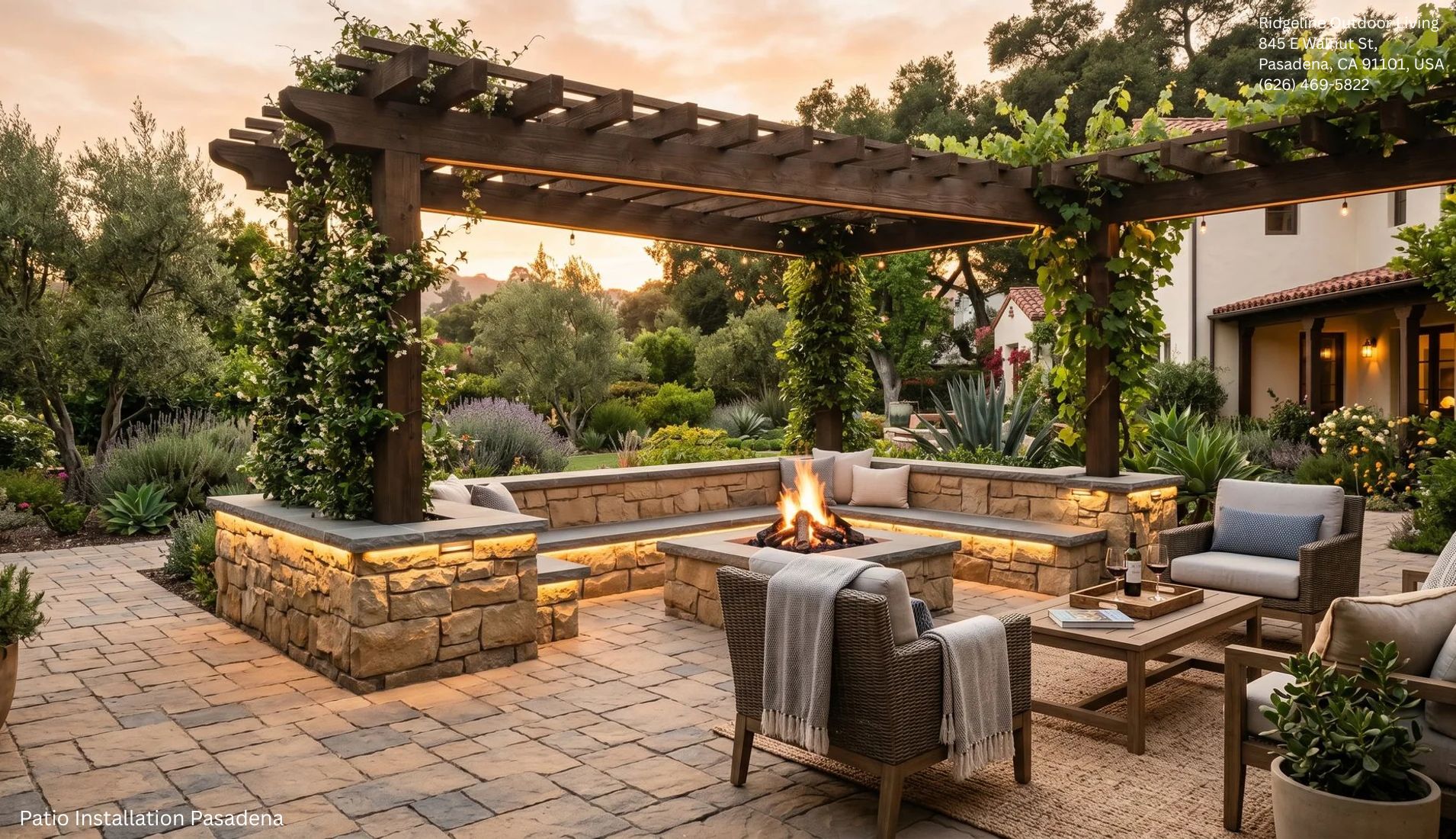
“15 Luxury Hardscape Ideas for Southern California Homes” have their place, but restraint often reads as luxury when the detailing is tight. Edge restraints invisible to the eye, saw cut joints in concrete aligned with door thresholds, and expansion joints that match grout colors are the kinds of quiet moves that experts notice and buyers feel.
Drainage, always
“French Drains Explained: Protecting Your Property From Water Damage” should be required reading before any patio or wall goes in. We design systems to move water off the house quickly, slow it where possible on site, and discharge legally. “How to Solve Common Yard Drainage Problems” ranges from raising low planters and regrading away from foundations, to adding catch basins at the toe of slopes. “How to Prevent Yard Flooding With Proper Drainage Solutions” sometimes means permeable pavers that store stormwater, sometimes a sump that pushes water uphill to the street. “10 Signs Your Yard Needs Better Drainage” include persistent wet pockets days after a storm, foundation staining, mildew on fences, and sinking paver edges. Solve these before planting or building anything pretty.
Materials that suit Southern California
“The Best Hardscape Materials for Southern California Landscapes” balance heat, texture, and care. Porcelain pavers stay cool relative to dark stones, resist stains, and offer consistent calibration for clean installs. Limestone and travertine are beautiful but need sealing and care around pools where acids live. Concrete pavers bring value and modular control. Decomposed granite paths are friendly and permeable, but they track dust near doors. We choose materials to match architecture, footwear, and maintenance patterns, not just the showroom.
Pools and the spaces around them
“Pool Landscaping Ideas for Los Angeles Homes” start with safety and ease, then add delight. We widen coping on busy sides to 18 to 24 inches so kids have a landing. We leave 5 feet clear behind chaise lounges so traffic and towels do not tangle. Shade is critical from 2 to 5 pm in summer. Planting around pools leans toward low litter species like olives, Trachelospermum on trellises, and clipped Myrtus for structure. “How to Design a Backyard Around Your Swimming Pool” includes lining up the licensed landscapers Pasadena pool’s long axis with a view or architectural element, then staging dining and lounge zones off that line.
Budgeting with eyes open
“What Does Hardscape Construction Cost in Los Angeles?” is a big question with a local answer. Access, permits, utilities, and finish quality shape the number. A compact full backyard renovation that includes a 400 square foot paver patio, a modest pergola, a built in grill station, new lighting, plantings, and irrigation may range from 120,000 to 220,000 dollars. Larger lots with structural walls, pools or spas, and covered outdoor rooms easily run higher. Transparent allowances for utilities, soils work, and drainage keep numbers honest. “Why Professional Landscape Design Saves Time and Money” is not a slogan here. Good drawings, spec sheets, and a realistic schedule prevent mid project redesigns and delays.
Avoiding common missteps
We keep a quiet list titled “10 Backyard Renovation Mistakes to Avoid.” High on it are overbuilding square footage without thinking about daily furniture layout, forgetting wind and sun patterns, skipping shade, and installing plants that will outgrow the space by year three. Another is underestimating the role of storage. If you have cushions, pool toys, or pizza oven peels, make room for them, do not scatter them. A small cabinet in the outdoor kitchen or a deck box tucked behind a bench keeps decks photo ready on a random Tuesday.
On the technical side, tying patios directly to house stucco without a reveal invites moisture issues. We always create a gap and flash correctly. Lighting transformers go where you can reach them, not buried behind shrubs. Irrigation valves get grouped in boxes big enough to service, labeled, and mapped.
How Ridgeline Outdoor Living brings it together
“How Ridgeline Outdoor Living Designs Stunning Outdoor Spaces” and “How Ridgeline Outdoor Living Creates Functional Outdoor Living Spaces” are not separate ideas for us. Beauty and use inform each other. We sketch early in plan and section, then model sun angles at 10 am, 2 pm, and sunset to test shade and glare. We ask clients to name a space by time, like Saturday breakfast or Wednesday homework, to force priorities. We call this sequencing the day. It keeps features from spreading randomly across the yard.
“10 Questions to Ask Before Hiring a Landscape Contractor” almost always reveal the same essentials. Who will manage the build daily? What is the warranty on plants and hardscape? How are change orders handled? Do you self perform critical scopes or manage only through subs? What is your plan if we uncover a broken sewer line or an abandoned gas stub? Real answers show up in writing and in references.
When a backyard becomes a resort at home
“10 Ways to Create a Resort-Style Backyard at Home” are less about slides and more about comfort. Shade where you want to sit, water to hear, a place to cook well, soft ground underfoot where kids run, lighting that calms rather than shocks, and storage so the stage sets quickly. “12 Backyard Entertainment Features Every Homeowner Should Consider” can include a projection wall with a hidden conduit, a gas fire table that doubles as a coffee table, a beverage fridge within 10 steps of the lounge, and a small stage area for impromptu music. Tie them to a plan that respects adjacency and simple traffic flows, and you will actually use them.
Business Name: Ridgeline Outdoor Living
Address: 845 E Walnut St, Pasadena, CA 91101, United States
Phone: (626) 469-5822
Ridgeline Outdoor Living
Ridgeline Outdoor Living is a Pasadena-based landscape design-build company serving Greater Los Angeles with custom outdoor living, hardscape, and drought-tolerant landscape solutions. The company specializes in patios, retaining walls, outdoor kitchens, drainage, hillside projects, and turnkey landscape construction, handling projects from design and permitting through final build and warranty.
845 E Walnut St, Pasadena, CA 91101, USA
Business Hours:
- Monday – Saturday: 8:00 AM – 6:00 PM
- Sunday: Closed
Follow Us:
“Designing the Perfect Outdoor Dining Space” comes down to comfortable clearances, scale, and microclimate. We allow at least 3 feet from chair back to planter or wall, 4 feet near walkways, and orient the table so no one is staring into sun at sunset. If you can fit a 10 foot table, you can host eight easily and ten when needed. Pendant lights outside look inviting but need listed damp rated fixtures and proper mounting. Often a pair of downlights and a dimmable string set achieve the mood with less maintenance.
Permits, inspections, and the long game
Los Angeles jurisdictions vary on permit thresholds. Covered structures, gas and electric work, new retaining walls, and major grading typically trigger permits and inspections. We pull and schedule them. Some HOAs have architectural committees with their own calendars. Build that time into your expectations. Done correctly, the paper trail and inspections protect you and the property.
After the last sweep and wipe down, a yard still needs a gentle hand for the first season. Plants establish over one to two years. Irrigation should be tuned quarterly. Sealed stone needs periodic care. A scheduled walk through at three months, six months, and one year keeps everything on track. That is the long game and it pays off.
A brief, practical comparison for lawns and shade decisions
Clients often weigh two decisions that shape the daily feel of a yard. Here is a concise guide you can use during planning:
- Artificial Turf vs Sod: turf is durable and low maintenance with higher upfront cost and heat considerations, sod is cooler underfoot and lower initial cost with more water and mowing long term
- Pergola vs Covered Patio: pergolas give flexible, airy shade at lower cost and quicker approvals, covered patios provide all weather use, integrated lighting, and stronger heat control with more structure and permit needs
- Pavers vs Stamped Concrete: pavers flex at joints, allow repairs, and offer rich textures, stamped concrete is monolithic, often lower cost upfront, but repairs telegraph and cracking is a risk on expansive soils
- Natural Grass by Pool vs Planting Beds: grass cools feet but brings clippings to water, planting beds with gravel mulch reduce debris and can be designed for color and structure year round
- Low Voltage Lighting vs Solar Path Lights: low voltage offers control, longevity, and consistent color, solar is low install cost but inconsistent brightness and shorter life
The real measure
Great backyards do not announce cost, they reveal care. They feel easy at 7 am on a weekday and on a crowded Saturday night. They work with Los Angeles sun and slope, conserve water without looking sparse, and use materials that hold up to time and weather. The design-build process at Ridgeline Outdoor Living exists to move you there with clarity. From soil under the patio to the warmth at the table, each choice shapes the next. Done well, your yard becomes the room everyone chooses first.