Ridgeline Outdoor Living’s Guide to Outdoor Kitchen Design and Planning
Outdoor kitchens in Los Angeles carry a different rhythm than in most cities. We plan for salt air along the coast, late afternoon sun in the valleys, Santa Ana winds in the fall, and a near year-round entertaining season. When clients ask where to begin, we start with how they live. Brunch with family twice a month calls for a different layout than midweek grilling for two. A chef who sears at 700 degrees needs counter material that will not flinch. A hillside property needs footings and drainage that keep everything stable through wet winters and dry summers. The most successful projects fold these realities into a kitchen that looks effortless and performs under pressure.
Start with use, not with appliances
Many homeowners open a browser, fall in love with a 42 inch grill, and work backward. That often leads to overbuying equipment and underbuilding the environment. We first map the ritual. Who shops and preps. Where groceries come in. Who cooks. How guests mingle. Where smoke should go. A couple who loves wood fired pizza will accept longer heat-up times. Someone who marinates fish every Friday wants refrigeration at hand and a sink nearby. These choices shape the island length, the number and type of zones, and the circulation around them.
In our design studio we sketch in sequences. Picture arriving from the driveway with bags. You should step into a shaded landing zone with a clean counter for staging. Prepping needs water, a waste pullout, and cutting space clear of open flames. Cooking requires clearances, ventilation, and tools within arm’s reach. Serving travels toward the table or bar, not back through the cook zone. Cleanup lands near the sink and dishwasher if you plan one. When the flow reads like a sentence, the kitchen works for years without friction.
The site tells you what is possible
Even small backyards in Los Angeles can host ambitious kitchens if the site is read correctly. Setbacks, utilities, grade, and microclimate are the first reality checks. The City and County have rules that address gas lines, electrical work, and overhead clearances. They are sensible but not identical from one jurisdiction to the next. Expect to pull permits for new gas and electrical. Expect inspection of venting and bonding. Expect to demonstrate that new paving slopes properly to a legal drain. Good planning folds these into the timeline instead of fighting them at the end.
A quick first pass on most properties includes the following.
- Sun, wind, and views during the hours you will cook and dine
- Access paths for materials, and where trenching for utilities will run
- Drainage routes, existing slopes, and low spots that need correction
- Proximity to property lines, doors, and windows that might catch smoke
- Existing trees, overhead wires, and structures that affect cover options
A client in the Hollywood Hills once asked for a long linear island pointing straight at a canyon view. Stunning to look at, impossible to use at 5 p.m. In July when the sun hit the chef’s eyes. We rotated the cook station 15 degrees, added a light pergola with adjustable louvers, and set a bar rail that captured the panorama for guests. The cook worked in shade, the view remained perfect, and the wind pulled smoke away from seating.
Layouts that fit Los Angeles backyards
Detached grill carts can be charming, but a built-in kitchen earns its keep with space planning. We most often design L shapes on mid-sized patios because they create a working corner for prep and a social edge for stools without bloating the footprint. Straight runs work on narrow side yards, especially paired with a slim 24 to 30 inch grill and a pullout cart that tucks away. U shapes make sense when you host often and want cook, bar, and service zones separated. On hillside terraces, we break the kitchen into two smaller pieces across a level change, then bridge them with steps that double as seating.
Zones matter more than shapes. Heat stays together. Cold storage and ice live outside of the main heat plume so compressors last. Prep runs next to the sink, not between the grill and the pizza oven. Bar sinks are wonderful for chilling bottles, but many homeowners commit to one big sink at first and later add an integrated ice well when they realize how useful it is during parties.
Clearances prevent frustration. We target 36 inches minimum circulation around islands and prefer 42 to 48 inches if space allows. Grill lids need to swing open without striking fences or pergola posts. Ovens need elbow room for peels. If you plan bar stools, keep 24 inches of width per seat and 12 inches of counter overhang with proper corbels or concealed supports. That ratio lets guests sit comfortably without knees knocking into island faces.
Surfaces and structure that last
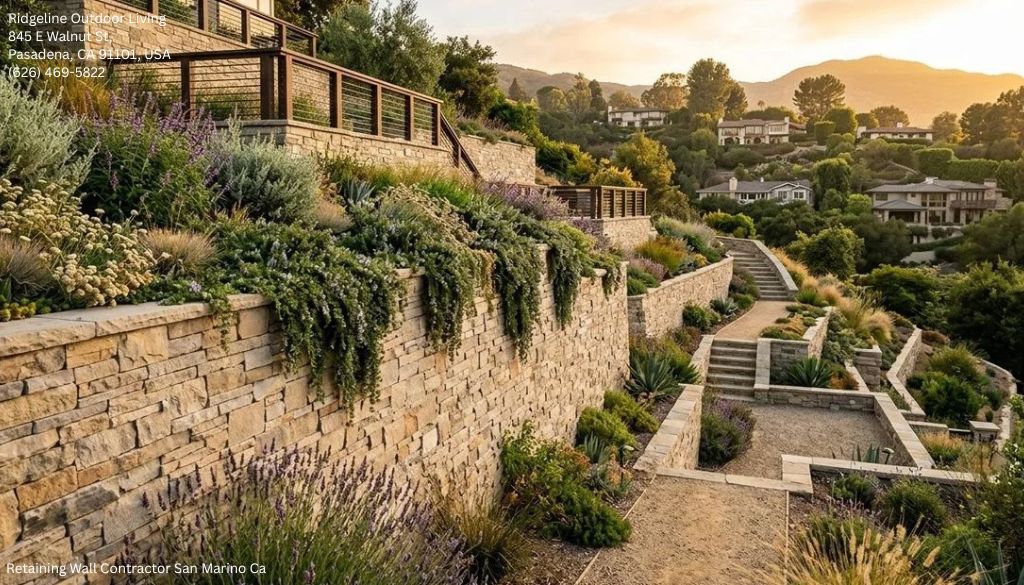
Outdoor kitchens look simple from above. Under the skin, their longevity depends on foundations, framing, and how materials respond to heat, sun, and moisture. For patios, we recommend either a reinforced 4 inch concrete slab or high quality paver systems over compacted base. Pavers move with minor ground shifts and drain through joints, which is why many of our projects reference ideas from 15 Paver Patio Designs Los Angeles Homeowners Love. On steep lots, we integrate retaining walls, sometimes in low heights that double as bench seating. Clients often ask about retaining walls for hillside properties. What homeowners need to know is that the wall’s drainage and footing matter far more than the visible stone, and that a geotechnical opinion pays for itself in risk avoided.
Business Name: Ridgeline Outdoor Living
Address: 845 E Walnut St, Pasadena, CA 91101, United States
Phone: (626) 469-5822
Ridgeline Outdoor Living
Ridgeline Outdoor Living is a Pasadena-based landscape design-build company serving Greater Los Angeles with custom outdoor living, hardscape, and drought-tolerant landscape solutions. The company specializes in patios, retaining walls, outdoor kitchens, drainage, hillside projects, and turnkey landscape construction, handling projects from design and permitting through final build and warranty.
845 E Walnut St, Pasadena, CA 91101, USA
Business Hours:
- Monday – Saturday: 8:00 AM – 6:00 PM
- Sunday: Closed
Follow Us:
For the island body, we specify either welded steel or masonry block on footings, with concrete board and waterproof membranes. We avoid wood framing near high heat, even with fire rated sheathing. Salt air within a few miles of the coast can corrode mild steel, so we upgrade to galvanized or stainless fasteners and require a careful paint or powder coat system inside enclosed cavities.
Countertops see the worst abuse. Afternoon sun can turn dark stone into a griddle. Grease, wine, and citrus etch porous surfaces. We have had excellent results with high density porcelain slabs, Dekton, sintered stone, and certain granites. They resist heat and staining, and some come in matte finishes that stay cooler. Concrete counters are beautiful and customizable, though they need sealing and can develop hairline cracks that are purely cosmetic. Tiling a counter looks classic but requires perfect substrate prep and grout suited to outdoor life. For bar tops that face west, lighter tones reduce heat gain and keep guests comfortable at cocktail hour.
Equipment that matches the cook
Appliances drive cost, but more is not always better. Gas grills remain the backbone, with sizes between 30 and 42 inches fitting most homes. Side burners or a single power burner earn their space if you love woks, paella, or crab boils. Pizza ovens add theater. Wood fired models deliver inimitable flavor but require more lighting time and attention. Gas models heat faster and permit weekday pies. Smokers can be built in or left mobile. We often steer serious pitmasters toward a dedicated corner with utilities and wind protection rather than jamming a smoker into an island it does not need.
Refrigeration outdoors should be rated for outdoor use, period. Undercounter units without that rating fail early, usually on the hottest day. If ice is important, consider a commercial style ice maker only if you can commit to maintenance. Otherwise, a deep insulated bin is simpler. Kegerators behind a bar are great, but demand a shaded spot and a vented door to keep compressors happy. If you host frequently, a warming drawer near the grill changes your cadence. You can hold proteins while you finish sides without overcooking.

Clearances to combustibles and ventilation are not afterthoughts. Manufacturer requirements vary, but nearly all built-in gas appliances require space around and above the unit and insist on vent panels low on the island for propane or high for natural gas. Ignoring these rules shortens equipment life and endangers users. We create venting paths that are discreet and decorative, then double check against the cut sheets for the exact models the client selects.
Utilities, permitting, and the part nobody photographs
Clients often remember the first meal they cook outside. Our team also remembers the days we spent trenching a gas line across fifty feet of concrete, then restoring the hardscape with color matched pavers. Utility paths shape cost and schedule. Gas runs are usually the longest. If you use propane, budget for a safe tank location, service clearances, and venting below the islands. Electrical service should be on dedicated circuits with GFCI protection. Plan task lighting in the hood or pergola, ambient path lighting to and from the kitchen, and accent lighting that washes stone or plantings without glare. We reference 10 Outdoor Lighting Ideas for Los Angeles Landscapes in early design so we can cast wires in sleeves before concrete is poured.
Water and waste require careful routing to approved connections. Los Angeles does not freeze often, but codes still require burial depths and insulation in some cases. Hot water at the sink is either a tie-in from the house or a dedicated small on-demand unit under the island. Dishwashers outdoors need strict attention to weatherproofing and are rarely worth it unless the kitchen is under a fully covered patio with proper doors.
Drainage is never optional. A good rule is to build impermeable surfaces at a slope of 1 to 2 percent away from structures toward area drains or permeable bands. If you have a history of wet spots, French Drains Explained is a helpful primer. We often hide narrow channel drains at the toe of an island and grade paving so that a washdown with a hose sends everything to a legal exit point. In hillside neighborhoods, that exit cannot be your neighbor’s yard.
Seismic and wind behavior matter. Tall elements like chimneys or pergola posts should be anchored into footings that carry below the frost line and into competent soil. We use steel connectors rated for uplift and lateral forces. Glass wind screens make sense at coastal sites but need posts and clamps that ignore corrosion and gusts. The structural details do not show up on Instagram, but they are the reason your kitchen stands quietly through a Santa Ana event.
Finishes that tie the kitchen to the landscape
An outdoor kitchen that looks like it dropped from a catalog will never feel right. Materials should nod to the home’s architecture and to the rest of the yard. Smooth stucco islands match midcentury and contemporary homes. Board formed concrete and dark metal pair with modern lines. Stacked stone or limestone veneers work with Mediterranean and Spanish styles, as do handcrafted tiles used sparingly as accents. We carry patterns across spaces with restraint. A porcelain plank on the patio might repeat as a splash behind the bar. A charred wood pergola beam might reappear as a trim on the counter edge. Consistency builds calm.
Planting softens the hardscape. In a region where water wise design is expected, The Best Drought-Tolerant Plants for Los Angeles Yards provides a long list of companions that will not sulk near heat. We often set succulents, rosemary, and thyme in planters just off the hot zone. They scent the air and give the cook a handful to snip. Artificial Turf vs Sod is a frequent conversation near play areas. Turf handles traffic and looks clean beside pavers, while sod cools the air and feels great under bare feet. Either way, avoid placing lawn flush with the grill face, or you will be fishing out grease drips after every party.
Budget ranges and what moves the number
Clients ask, How Much Does an Outdoor Kitchen Cost in Los Angeles? Market conditions move, but useful ranges exist. A simple built-in grill with a small counter on a new paver patio, gas stub within ten feet, and basic lighting often falls in the 20,000 to 35,000 dollar range. Step up to a larger island with a premium grill, side burner, undercounter refrigerator, sink, porcelain counters, full electrical, and a modest pergola, and you are likely in the 45,000 to 85,000 dollar range. Add a pizza oven, custom steel pergola with motorized louvers, complex drainage corrections, premium stone, and long utility runs, and budgets can pass 100,000 dollars. On steep sites that need retaining, footings, or engineered walls, overall project budgets rise accordingly.
Appliances are the levers you can move late in the process. A 36 inch premium grill can cost three times a solid mid tier unit. Refrigeration varies widely. Countertops also swing budgets. Porcelain and sintered stone cost more up front but save on sealing and maintenance. Stamped concrete can be a value play compared to large format pavers, though Paver Patios vs Stamped Concrete has trade-offs worth reading. Labor for trenching and restoration is often underestimated. If utilities need to cross an existing driveway or a finished deck, the restoration line item grows.
We sometimes phase projects. Get the patio and island body built, run conduits and gas stubs, and plug in a freestanding grill while you plan for the final appliance package. You enjoy the space sooner and buy time to choose equipment without rushing.
Safety fundamentals built into design
Heat, grease, and guests do not mix without intention. Keep grills offset from main doors and windows so smoke does not roll inside. Install non-combustible backsplashes where flames can lick. Place fire extinguishers in a dry cabinet guests can find. If you host with children around, set a bar ledge that defines the cook zone and signals hands-off to little ones. For fire features nearby, follow manufacturer clearances and avoid seating that lets loose pillows blow into flames. Our crew has pulled melted foam from burners more than once when wind surprised a party.
Lighting deserves a second mention. Reliable cooking needs layered light. A combination of hood lighting, low glare downlights from a pergola, and soft toe-kick or undercounter strips keeps eyes relaxed. Avoid skylights or clear roofing directly above grills landscaping guides unless they stand far enough away to prevent heat stress and staining. Low voltage lighting along paths frames safe routes after dark and highlights plants and water features. Many of our projects borrow from 12 Water Feature Ideas for Luxury Los Angeles Backyards, then add dimmable lighting so water reads as a quiet backdrop when people mingle.
Shading and shelter: pergolas, covered patios, or open sky
The right cover is not fashion. It is performance. Pergolas filter light and allow heat and smoke to rise. Motorized louvers shift with the sun and close during a drizzle, which extends use without trapping smoke. Covered patios deliver the most protection but need careful placement of grills and pizza ovens to avoid soot buildup and roof damage. We help clients compare Pergolas vs Covered Patios by testing sun paths on the actual site. On ocean-adjacent lots, salt and wind drive us to powder coated aluminum or steel for frames, with stainless hardware and concealed wiring for fans and lights. Inland, wood remains a beautiful, cost effective option if maintained.
Drainage and paving that respect water
A beautiful kitchen on a soggy patio is a misuse of money. We assess the entire yard like a shallow basin. Water should enter at defined points, move across hardscape with a gentle slope, and exit at legal outfalls. If your yard shows pooling after storms, Common Landscape Drainage Problems and Their Solutions is worth a read. French drains along the uphill edge of patios catch subsurface flow. Permeable bands break up large slabs and let water disappear into engineered base. In hilly neighborhoods, a small retaining wall can double as a water control feature, redirecting sheet flow around the kitchen zone and leaving you with a dry floor underfoot.
A planning path that keeps stress down
Clients feel more in control when they know the order of operations. We keep it simple.
- Discovery and concept: discuss lifestyle, budget ranges, and site constraints; sketch flow and zones
- Preliminary engineering: verify drainage intent, utilities, and any retaining or footing needs
- Selections and permitting: lock in appliances and finishes; submit for gas, electrical, and structural permits
- Build and rough-in: demo or prep, trench utilities, set base, form and pour or lay pavers, frame islands
- Finishes and commissioning: counters, veneers, lighting, plumbing trim, appliance install, test and train
Training matters. On handover day we run through lighting scenes, gas shutoff, vent panel use, cleaning products that will not ruin finishes, and seasonal tune ups. Clients who learn why a vent panel exists will never block it with a trash can.
Designing for Los Angeles lifestyles
Los Angeles backyards host as many moods as the city itself. Some clients want a resort feel. Others want a quiet, private refuge. Ten Ways to Create a Resort-Style Backyard at Home often begins with a spine of hardscape that integrates pool edges, fire features, and a bar station, then layers in lighting and planting. If you are renovating an older yard, 10 Backyard Upgrades Worth the Investment frequently leads to a short list of high impact moves. Replace a cracked concrete pad with a paver patio, add an integrated kitchen tuned to your habits, and use drought tolerant planting to frame the space. Those moves raise daily enjoyment and resale value. On that point, 10 Hardscaping Features That Increase Property Value routinely names built-in kitchens because buyers see themselves living outside immediately, not after another project.
Hillside homes need extra respect. The Complete Guide to Hillside Landscaping in Los Angeles is a reminder that stability and access drive design. Kitchen islands might step with the grade, utility trenches might get rerouted to avoid roots and geogrid, and railings might form wind breaks without blocking light. When we show clients how these elements knit together, they stop seeing constraints and start seeing character.
Maintenance that keeps the kitchen feeling new
Good design reduces maintenance. It does not remove it. Schedule a seasonal check. Tighten hardware, clean burner ports, degrease hood baffles, reseal porous counters if needed, and flush drains. Use covers that breathe. Avoid harsh cleaners that etch stone and stainless. Keep citrus and wine rinsed off counters. Maintain pergola finishes on a predictable cycle so wood looks warm, not tired. If you have an ice maker, follow the manufacturer’s cleaning schedule. If you have a pizza oven, learn its heat-up curve so you do not overfire and crack stone. These habits extend the life of your investment.
We often integrate small water wise planting refreshes into maintenance visits. The Ultimate Guide to Drought-Tolerant Landscaping in Los Angeles and 15 Water-Wise Landscaping Ideas for California Homes inform our plant palette. A few new grasses near the bar, a young Discover more olive tree to soften a wall, or a drift of lavender that brushes ankles can reset the entire mood for little cost.
When to call a professional
DIY has its place. A store-bought grill and a rolling cart on a deck can keep you happy for a summer. Once you move gas, electricity, permanent structures, and drainage, you gain from experienced eyes. How Ridgeline Outdoor Living Approaches Design-Build Landscaping explains why a single team from concept to completion reduces change orders and surprises. If you interview firms, ask how they handle permitting, who manages utilities, what warranties apply, and how they train clients after install. You will learn quickly who treats your yard as a system, not a shopping list.
Clients sometimes worry that professional design costs more. Why Professional Landscape Design Saves Time and Money turns that worry around. A clear plan avoids rework, nails utilities the first time, integrates lighting and planting, and produces a yard that reads as one thought. That unity is what neighbors notice when they say the space feels right.
A final word from the field
The outdoor kitchens our clients love five years later have a few things in common. They match how their owners truly cook and host, not a fantasy pulled from an ad. They handle sun, wind, and water with quiet competence. They use materials that shrug at heat and weather. They give the cook a view and guests a reason to linger. They look like they were born with the house.
If you are ready to explore options, walk your yard at the hour you most expect to be outside. Notice where shadows fall, where breeze moves, and where you naturally want to stand. Imagine setting a cutting board there. Imagine inviting friends to that corner. Then let a good plan grow from that picture. The right outdoor kitchen becomes less a project and more a habit you look forward to every week.